
Information Details
Youda insulation material manufacturer regularly updates insulation product information and company news to keep you informed of the latest developments and industry trends.
Environmental Regulations in G10 Epoxy Sheet Manufacturing
In recent years, the manufacturing of G10 epoxy sheets has become an area of increasing interest for environmental scrutiny. As industries strive for sustainability, environmental regulations have significantly influenced the processes and materials used in G10 epoxy sheet production. This article delves into the key environmental regulations that affect G10 epoxy sheet manufacturing, with a focus on the impact these regulations have on production practices, material selection, and overall sustainability efforts.
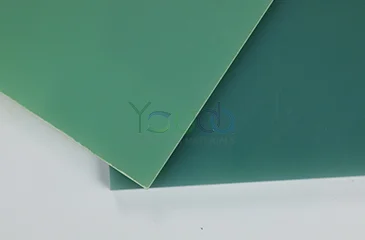
Understanding G10 Epoxy Sheets
Before diving into the specifics of environmental regulations, it’s essential to understand what G10 epoxy sheets are and why they are important. G10 epoxy sheets are a type of high-strength composite material primarily used in the electrical and mechanical industries. These sheets are composed of woven fiberglass cloth impregnated with epoxy resin, making them highly durable, heat-resistant, and electrically insulative. These properties make G10 epoxy sheets crucial in applications ranging from circuit boards to industrial machinery components.
Given their widespread use, the environmental impact of producing G10 epoxy sheets has drawn attention in recent years. This has led to the introduction of stricter regulations aimed at reducing waste, energy consumption, and emissions associated with their manufacturing.
Key Environmental Regulations Impacting G10 Epoxy Sheet Manufacturing
Several environmental regulations directly affect the production of G10 epoxy sheets, particularly in regions such as the European Union and the United States, where there is a strong push towards reducing industrial environmental footprints.
RoHS (Restriction of Hazardous Substances)
RoHS, an EU directive that restricts the use of certain hazardous materials in electrical and electronic products, is one of the most significant regulations affecting the G10 epoxy sheet industry. The substances covered by RoHS include lead, mercury, cadmium, hexavalent chromium, and certain flame retardants. Manufacturers of G10 epoxy sheets must ensure that the resins and materials used in their production do not exceed the allowable concentrations of these substances.
The challenge lies in finding alternative materials that still meet the mechanical and electrical requirements of G10 epoxy sheets while complying with RoHS restrictions. This requires significant research and development efforts to source safer chemicals and materials that align with sustainability goals.
REACH (Registration, Evaluation, Authorization, and Restriction of Chemicals)
REACH is another European regulation that affects G10 epoxy sheet production. REACH governs the registration, evaluation, and authorization of chemicals used in manufacturing processes. Manufacturers must ensure that all chemicals in their production processes, including epoxy resins and curing agents, are properly evaluated for safety and environmental impact.
Under REACH, manufacturers are required to disclose the chemical composition of their products and any potential hazards associated with these chemicals. This transparency helps ensure that harmful substances are not used in the production of G10 epoxy sheets, thus reducing the overall environmental and health risks associated with the product.
The Clean Air Act (CAA)
In the United States, the Clean Air Act (CAA) plays a crucial role in regulating emissions from manufacturing plants, including those involved in G10 epoxy sheet production. The resin used in G10 sheets, while providing high mechanical strength, can release volatile organic compounds (VOCs) during production, which are harmful to both the environment and human health.
To comply with the CAA, manufacturers must implement technologies and processes that reduce the release of VOCs and other air pollutants. This could involve adopting low-emission resins, improving ventilation systems, or using alternative curing processes that minimize the release of harmful gases.
Waste Management and Circular Economy Regulations
With the growing global focus on sustainability, the concept of a circular economy is becoming increasingly important in the manufacturing industry. G10 epoxy sheet manufacturers are now being encouraged, if not required, to adopt waste management practices that support recycling and reusing materials.
In many jurisdictions, manufacturers must follow regulations that ensure the proper disposal and recycling of waste products. This includes managing scrap fiberglass, excess resin, and other production by-products that could otherwise end up in landfills. By adhering to these regulations, manufacturers not only minimize environmental impact but also reduce production costs and improve material efficiency.
Sustainable Practices in G10 Epoxy Sheet Manufacturing
To meet these regulatory requirements and maintain competitiveness in the market, manufacturers have been forced to adopt a range of sustainable practices. Below are some of the key strategies being implemented in G10 epoxy sheet manufacturing:
Use of Eco-Friendly Materials
One of the primary focuses for manufacturers is finding more sustainable alternatives to the chemicals and resins traditionally used in G10 epoxy sheets. For instance, some companies are turning to bio-based resins that reduce reliance on petrochemical derivatives. Additionally, efforts are being made to replace halogenated flame retardants, which are often toxic, with safer, more environmentally friendly alternatives.
Energy Efficiency and Emissions Reduction
Manufacturers are also focusing on improving the energy efficiency of their operations. This includes optimizing production processes to reduce energy consumption and implementing cleaner energy sources, such as solar or wind power, to power factories. Energy-efficient machinery, heat recovery systems, and better insulation techniques are all being employed to minimize the carbon footprint of G10 epoxy sheet manufacturing.
Closed-Loop Recycling Systems
Closed-loop recycling systems are becoming more common in G10 epoxy sheet manufacturing. In these systems, waste materials generated during production are collected, processed, and reused in the manufacturing process. This reduces the need for raw material extraction and minimizes waste, ultimately lowering the environmental impact of production.
Life Cycle Assessment (LCA)
Life Cycle Assessment (LCA) is another crucial tool for assessing the environmental impact of G10 epoxy sheets. LCA allows manufacturers to evaluate the entire life cycle of their products, from raw material extraction to end-of-life disposal. By conducting LCAs, manufacturers can identify areas where they can reduce environmental impact, improve resource efficiency, and make more sustainable material choices.
Conclusion
As environmental regulations continue to tighten, the manufacturing of G10 epoxy sheets will undoubtedly evolve. Manufacturers who prioritize compliance with these regulations, while simultaneously adopting sustainable practices, will not only meet legal requirements but also gain a competitive advantage in an increasingly eco-conscious marketplace. The future of G10 epoxy sheet production lies in the integration of eco-friendly materials, energy-efficient processes, and responsible waste management practices—all of which will contribute to a more sustainable manufacturing industry.
★★★ Recommended Reading:
How Quality Control Ensures Reliable G10 Epoxy Sheet Performance
If you need detailed information about related products, you can let me know via online chat, email, WhatsApp, or any other method, and we will contact you on the same day to solve your problem.





