
Information Details
Youda insulation material manufacturer regularly updates insulation product information and company news to keep you informed of the latest developments and industry trends.
Electrical Insulation Performance of FR4 Epoxy Laminate Sheets
Market Dynamics: FR4 Epoxy Laminate Sheets Supply Chain Under Pressure
Global demand for FR4 Epoxy Laminate Sheets has surged in 2025, triggering a notable supply crunch and price volatility. Industry reports indicate a 12–18% year-over-year increase in raw material costs, with lead times extending from the typical 4–6 weeks to over 10 weeks in some regions. This tightening stems primarily from two interlinked factors: persistent shortages of brominated epoxy resins—key flame-retardant components—and heightened demand driven by the rapid expansion of high-density computing infrastructure, electric vehicles, and 5G base stations.
Given these constraints, procurement teams are strongly advised to conduct immediate supply chain audits and secure long-term agreements with qualified suppliers. Proactive planning is no longer optional—it’s a strategic necessity to avoid production bottlenecks in PCB-dependent sectors.
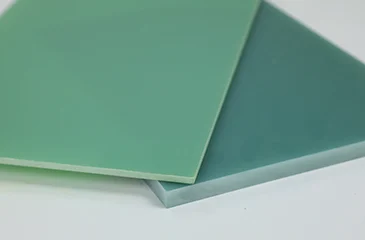
Electrical Insulation Performance of FR4 Epoxy Laminate Sheets
As supply pressures mount on FR4 Epoxy Laminate Sheets, engineers and procurement specialists alike must look beyond availability metrics and re-examine the material’s foundational role in electrical reliability. While FR4 is often treated as a commodity in printed circuit board (PCB) design, its electrical insulation performance under real-world stress conditions—especially at elevated temperatures, high frequencies, or in humid environments—can make or break system integrity. This article delves into a technically nuanced yet critically overlooked aspect: how the molecular architecture and interfacial chemistry of FR4 govern its dielectric stability under thermal-electrical co-stress, a scenario increasingly common in modern power electronics and high-speed digital systems.
The Hidden Challenge: Dielectric Breakdown Under Thermal-Electrical Coupling
Most datasheets list FR4’s dielectric strength as approximately 20–30 kV/mm at room temperature—a figure that offers false comfort. In practice, when FR4 Epoxy Laminate Sheets operate near their glass transition temperature (Tg ≈ 130–140°C for standard grades), the combined effect of heat and electric field drastically accelerates aging mechanisms. Unlike pure polymers, FR4 is a composite: woven E-glass fabric impregnated with brominated epoxy resin. The interface between fiber and matrix becomes the weakest link under thermal cycling.
At elevated temperatures, microvoids form at the fiber-resin boundary due to coefficient of thermal expansion (CTE) mismatch. These voids act as charge-trapping sites, promoting partial discharges even at voltages well below nominal breakdown thresholds. Over time, this leads to progressive dielectric degradation—a phenomenon rarely captured in standard qualification tests but frequently observed in field failures of automotive inverters and server power supplies.
Molecular Design Dictates Insulation Resilience
The insulation robustness of FR4 Epoxy Laminate Sheets hinges on three interrelated molecular features:
Bromine Content and Distribution: Flame retardancy in FR4 traditionally relies on tetrabromobisphenol-A (TBBPA). However, uneven bromine dispersion can create localized zones of reduced crosslink density, lowering local dielectric strength. Advanced formulations now use reactive bromination—where bromine is chemically bonded into the epoxy backbone—yielding more homogeneous networks with superior arc resistance.
Curing Agent Chemistry: Dicyandiamide (DICY)-cured systems dominate low-cost FR4, but they exhibit higher moisture absorption and lower Tg compared to phenolic-cured variants. For applications demanding stable insulation above 120°C, phenolic hardeners offer denser crosslinks, reducing ionic mobility and suppressing electrochemical migration.
Filler Integration: Some high-performance FR4 grades incorporate silica or alumina nano-fillers. These not only reduce CTE but also disrupt conductive dendrite paths during humidity exposure. Crucially, surface-treated fillers improve interfacial adhesion, minimizing delamination-induced insulation faults.
Understanding these variables allows designers to move beyond generic “FR4” specifications and select grades optimized for electrical endurance, not just mechanical or thermal tolerance.
Frequency-Dependent Dielectric Behavior in High-Speed Applications
Another underappreciated dimension is how FR4 Epoxy Laminate Sheets behave at frequencies above 1 GHz—now commonplace in 5G, radar, and AI accelerator boards. While FR4’s dielectric constant (Dk ≈ 4.2–4.8) and loss tangent (Df ≈ 0.015–0.025) appear acceptable on paper, both parameters become highly frequency-sensitive due to dipole relaxation in the epoxy matrix.
At multi-gigahertz frequencies, the resin’s polar groups (e.g., hydroxyls from incomplete curing) oscillate out of phase with the applied field, converting electromagnetic energy into heat. This dielectric heating further elevates local temperature, creating a positive feedback loop that degrades insulation. Worse, moisture ingress—common in non-hermetic assemblies—amplifies this effect, as water molecules have a Dk of ~80 and significantly raise Df.
Designers mitigating this risk should prioritize FR4 laminates with:
- Low ionic impurity content (<200 ppm Na⁺/Cl⁻)
- Post-cure processing to minimize residual monomers
- Controlled resin content (typically 48–52%) to balance signal integrity and mechanical stability
Such specifications are rarely highlighted in commercial catalogs but are critical for maintaining insulation integrity in RF-dense environments.
Humidity and Electrochemical Migration: The Silent Insulation Killer
Perhaps the most insidious threat to FR4 Epoxy Laminate Sheets is humidity-induced electrochemical migration (ECM). In the presence of bias voltage, moisture, and ionic contaminants (often from flux residues), copper ions dissolve from traces and redeposit as dendritic filaments across insulation gaps. Standard FR4, with its inherent microporosity and hygroscopic resin, provides an ideal pathway for this failure mode.
Accelerated testing (e.g., 85°C/85% RH with 50V bias) reveals that conventional FR4 can develop conductive paths in under 500 hours. In contrast, modified FR4 formulations featuring:
- Hydrophobic surface treatments
- Ion-scavenging additives (e.g., zeolites)
- Reduced free bromide content
demonstrate ECM resistance exceeding 1,000 hours—making them viable for outdoor or automotive under-hood applications.
This underscores a key principle: insulation performance isn’t static; it’s a dynamic function of environmental exposure, material purity, and electrical stress history.
Strategic Implications: From Material Selection to System Reliability
The current supply constraints on FR4 Epoxy Laminate Sheets present more than a logistical hurdle—they expose a deeper truth: treating FR4 as a one-size-fits-all substrate invites latent reliability risks. Engineers who understand the interplay between resin chemistry, fiber architecture, and operational stressors can make informed trade-offs between cost, performance, and longevity.
For instance, in a 48V mild-hybrid inverter, selecting a high-Tg, phenolic-cured FR4 with nano-silica fillers may add 8–12% to material cost but eliminate the need for conformal coating or redundant isolation barriers—yielding net system savings. Similarly, in data centers, specifying low-Df FR4 variants can reduce signal loss and cooling load, indirectly enhancing insulation life by lowering operating temperature.
Moreover, this technical discernment empowers procurement teams to engage suppliers with precise performance criteria rather than generic part numbers. Instead of asking for “standard FR4,” they can request laminates validated for >1,000-hour ECM resistance or <0.018 Df at 10 GHz—criteria that filter out marginal suppliers and align purchases with actual application demands.
Conclusion: Depth of Knowledge as a Competitive Shield
In an era of volatile supply chains and escalating performance expectations, superficial familiarity with FR4 Epoxy Laminate Sheets is a liability. The true value lies in recognizing that FR4’s electrical insulation isn’t merely a bulk property—it’s an emergent characteristic shaped by nanoscale interfaces, molecular dynamics, and environmental interactions.
By grounding procurement and design decisions in this deeper understanding, organizations can not only navigate current market turbulence but also future-proof their products against emerging failure modes in electrified, connected, and high-frequency systems. In essence, technical depth becomes the ultimate insulation—against both electrical breakdown and strategic missteps.
★★★ Recommended Reading:
What Temperature Can FR4 Fiberglass Sheet Withstand? (Tg 130°C vs Tg 155°C)
If you need detailed information about related products, you can let me know via online chat, email, WhatsApp, or any other method, and we will contact you on the same day to solve your problem.





