
Information Details
Youda insulation material manufacturer regularly updates insulation product information and company news to keep you informed of the latest developments and industry trends.
How Epoxy Sheet Enhances Performance in Aerospace Components
In aerospace engineering, every gram, joint, and material interface contributes to mission success. The demand for materials that balance strength, weight, and environmental resilience is relentless. Among the various composites used today, the Epoxy Sheet has become a cornerstone material for high-performance aerospace components. Beyond its well-known strength and insulation properties, the epoxy sheet’s real contribution lies in how it enhances structural integrity, fatigue resistance, and vibration control—three aspects critical to the reliability and safety of flight systems.
This article delves deep into the mechanisms and advantages of epoxy sheet applications in aerospace components, focusing on how this engineered material enables lighter, more durable, and thermally stable structures capable of withstanding the extreme conditions of flight.
The Demands of Aerospace Materials
Aerospace environments present one of the harshest combinations of stressors: extreme temperature variations, constant vibration, high mechanical load, and exposure to fuels, oils, and UV radiation. A typical aerospace component—whether a fuselage panel, radar enclosure, or engine housing—must simultaneously:
Maintain dimensional stability under mechanical load
Resist fatigue from cyclic vibration and temperature shifts
Provide electrical insulation and chemical resistance
Exhibit lightweight strength to optimize fuel efficiency
No single metallic or polymeric material perfectly fulfills all these criteria. That’s where epoxy-based composites—particularly epoxy sheets—have emerged as versatile, high-performance alternatives.
Understanding Epoxy Sheet Composition
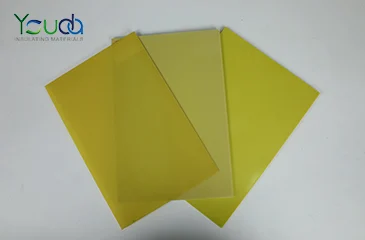
An Epoxy Sheet is typically composed of a thermosetting epoxy resin reinforced with woven or non-woven fibers such as glass, carbon, or aramid. When cured, the resin forms a rigid, cross-linked matrix that binds the reinforcement into a stable, high-strength laminate.
Key material characteristics include:
High tensile strength and modulus
Excellent adhesion to metals and composites
Dimensional stability under heat
Resistance to solvents and moisture
Controlled dielectric properties
By adjusting resin chemistry, filler content, and fiber architecture, engineers can fine-tune the sheet for specific aerospace needs—whether for mechanical stiffness, electrical insulation, or vibration damping.
Damping and Fatigue Reduction: The Hidden Strength of Epoxy Sheet
While many discussions about epoxy materials focus on strength-to-weight ratios, one of the most critical yet understated properties of the epoxy sheet is its mechanical damping ability. In aerospace structures, vibration and fatigue are persistent challenges. Every engine pulse, aerodynamic buffeting, and landing shock transmits dynamic stresses throughout the structure.
Over time, these oscillations lead to:
Microcracks in metallic or composite joints
Delamination of bonded layers
Fatigue failure under cyclic stress
An Epoxy Sheet possesses a viscoelastic matrix capable of dissipating vibrational energy as heat—a process known as internal damping. This property helps to stabilize structural responses, reducing peak stresses and prolonging component lifespan.
Laboratory testing and flight data have shown that incorporating epoxy sheets within load-bearing or bonded regions can reduce vibration amplitudes by up to 30%, leading to longer fatigue life and fewer maintenance interventions.
Structural Reinforcement and Adhesion Advantages
In addition to damping, epoxy sheets provide outstanding adhesion to metals, ceramics, and composite substrates. This characteristic makes them invaluable in hybrid material assemblies, where different materials are joined into a single structure—such as metal-to-composite fuselage joints or sensor mounting brackets.
Unlike mechanical fasteners that introduce stress concentrations, epoxy sheets distribute loads uniformly over the bonded surface, enhancing shear strength and reducing the likelihood of failure at the interface.
Moreover, the cross-linked epoxy matrix resists creep under sustained load, ensuring that structural alignment and stiffness remain intact throughout long operational periods.
Thermal Stability: Performance in Extreme Environments
Aerospace components experience temperature gradients ranging from sub-zero conditions in high-altitude flight to several hundred degrees Celsius near engines or exhaust systems. Traditional polymers tend to soften or degrade under such extremes, but Epoxy Sheets offer remarkable thermal stability.
With glass transition temperatures (Tg) reaching up to 180–220°C in advanced formulations, epoxy sheets maintain their rigidity and dimensional integrity even under sustained thermal cycling. The result is reliable performance across a wide range of service temperatures, ensuring consistent bonding strength, insulation, and mechanical response.
In spacecraft or high-altitude drones, where thermal stress can induce expansion and contraction cycles thousands of times during a mission, this stability is crucial.
Lightweight Efficiency and Structural Integration
Weight reduction is a primary goal in aerospace design. Every kilogram saved translates directly into greater payload capacity, longer range, or improved fuel efficiency. Epoxy Sheets contribute significantly to this objective by replacing heavier metallic panels or supports without compromising mechanical strength.
Their high specific strength—the ratio of strength to weight—allows engineers to design thinner, lighter sections while maintaining or even exceeding the stiffness of aluminum alloys. Furthermore, epoxy sheets integrate seamlessly into sandwich panel architectures, where they serve as skin or core layers that combine stiffness with energy absorption.
By acting both as a structural reinforcement and as a damping medium, epoxy sheets minimize the need for secondary materials, simplifying manufacturing and reducing assembly complexity.
Electrical and Dielectric Properties in Aerospace Systems
Modern aircraft and spacecraft are dense with electronics—navigation systems, radar arrays, communication modules, and control circuits—all of which must be shielded from electrical interference while remaining thermally managed. Epoxy sheets offer predictable dielectric strength and low electrical conductivity, making them ideal for insulating structural and electronic components.
When reinforced with glass fibers, they provide stable dielectric behavior over wide temperature and humidity ranges. This is particularly important in satellite assemblies, where insulation reliability is vital for preventing arcing or signal distortion under vacuum and radiation exposure.
Resistance to Harsh Chemicals and Environmental Stress
In aerospace maintenance and operation, exposure to hydraulic fluids, aviation fuel, lubricants, and de-icing agents is inevitable. A key advantage of the Epoxy Sheet lies in its resistance to such chemical exposure. Unlike thermoplastics that may swell or soften, epoxy’s cross-linked molecular structure provides a near-impermeable barrier to solvents and moisture.
Furthermore, epoxy laminates resist UV degradation and oxidative aging, maintaining surface integrity and bonding performance even after prolonged exposure. This makes them ideal for external structural panels, radomes, and engine compartment applications where long-term durability is essential.
Integration in Aerospace Applications
Epoxy sheets are now employed in nearly every sector of aerospace design. Their versatility allows them to function as both primary structural materials and supportive interface layers. Common aerospace applications include:
Avionics Enclosures and Circuit Boards
Provide electrical insulation and mechanical rigidity for electronic components.
Aircraft Interior Panels
Offer lightweight strength and excellent flame resistance for cabin structures.
Bondline Inserts in Composite-to-Metal Joints
Improve load transfer and damping in critical joining regions.
Satellite Structural Panels
Combine dimensional stability with vibration absorption under launch loads.
Engine and Landing Gear Fairings
Resist high temperature and cyclic mechanical stress.
By tailoring fiber architecture, resin composition, and sheet thickness, each of these applications can be optimized for the unique combination of mechanical, electrical, and environmental demands.
Material Innovation: Hybrid and Nano-Enhanced Epoxy Sheets
The latest advances in material science have further expanded the potential of epoxy sheets. Through nano-engineering, researchers have introduced fillers such as graphene, carbon nanotubes, and silica nanoparticles into the epoxy matrix to improve both mechanical strength and thermal conductivity without adding significant weight.
These nano-fillers also increase energy dissipation through micro-friction and interfacial shear, further enhancing damping properties. The result is a new class of hybrid epoxy sheets that combine traditional mechanical robustness with advanced multifunctional behavior—lightweight, vibration-resistant, and thermally stable.
Such innovations are especially promising for next-generation aircraft and spacecraft, where multifunctional materials are key to achieving higher performance and efficiency within compact designs.
Manufacturing and Sustainability Considerations
The aerospace industry’s shift toward sustainability also influences material selection. Epoxy Sheets offer several eco-efficient advantages:
Lower waste generation due to near-net-shape manufacturing.
Extended component lifespan, reducing maintenance and replacement cycles.
Potential for recyclable reinforcement fibers and bio-based epoxy resins.
Modern manufacturing processes—such as automated layup, compression molding, and out-of-autoclave curing—make large-scale production feasible while maintaining consistent quality. These methods reduce energy consumption and improve yield compared to traditional autoclave processes.
Case Insight: Structural Panel Optimization
In one aerospace design study, engineers replaced traditional aluminum honeycomb skins with carbon fiber-reinforced epoxy sheets in an aircraft’s control surface. The result was a 20% weight reduction and a 35% improvement in vibration damping. Fatigue testing indicated that the new structure sustained 40% more load cycles before visible damage occurred.
Such examples demonstrate that epoxy sheets are not merely substitutes for metals—they are enablers of performance improvements that conventional materials cannot achieve.
Conclusion
The Epoxy Sheet represents more than just a structural laminate; it embodies the intersection of material science and aerospace innovation. By combining high stiffness, superior damping, chemical resistance, and thermal stability in a lightweight form, it enables engineers to design components that are both stronger and more efficient.
In an industry where reliability, weight optimization, and durability determine success, epoxy sheets provide an invaluable advantage. From vibration mitigation to electrical insulation and thermal endurance, their multifunctional capabilities make them essential to the next generation of aerospace materials—quietly transforming the way we build and sustain flight.
★★★ Recommended Reading:
Epoxy Sheet in Automotive Engineering: Applications and Benefits
If you need detailed information about related products, you can let me know via online chat, email, WhatsApp, or any other method, and we will contact you on the same day to solve your problem.





