Information Details
Youda insulation material manufacturer regularly updates insulation product information and company news to keep you informed of the latest developments and industry trends.
Epoxy Sheet and Its Role in Electrical Switchgear Manufacturing
In the realm of modern electrical engineering, reliability and safety are paramount. Every component inside an electrical switchgear unit must withstand high voltage, fluctuating loads, and environmental stress over decades of service. Among the numerous materials that make this possible, the Epoxy Sheet has become a cornerstone in the design and manufacturing of high-performance switchgear.
More than a simple insulator, the Epoxy Sheet serves as a multifunctional composite material that combines excellent dielectric strength, mechanical rigidity, and environmental endurance. Its importance lies not only in separating electrical conductors but also in maintaining stability under severe conditions. This article explores the advanced role of epoxy sheets in electrical switchgear manufacturing, emphasizing the unique material properties and engineering innovations that make them indispensable to modern power systems.

Understanding the Epoxy Sheet
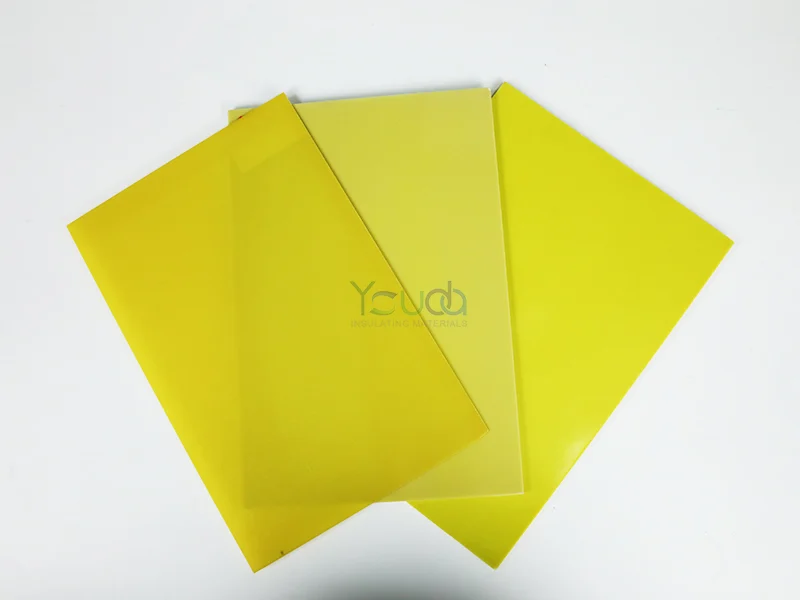
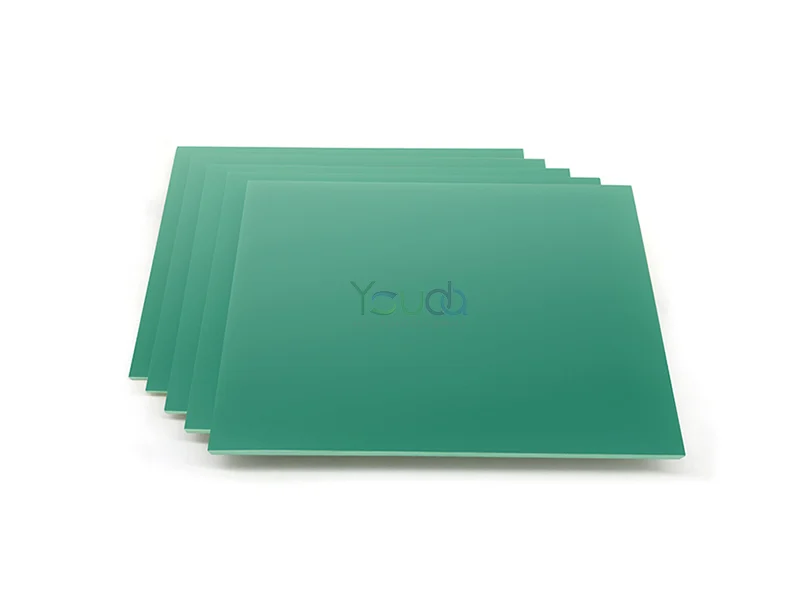
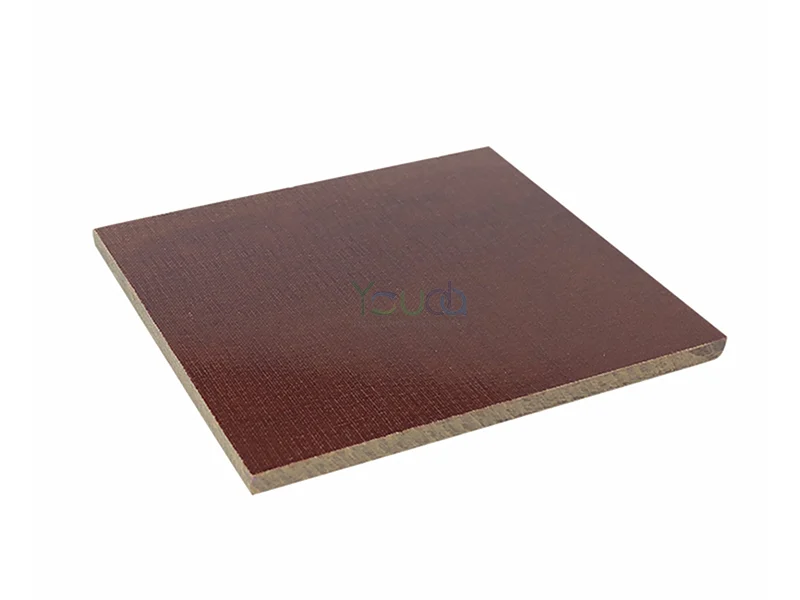
An Epoxy Sheet is a solid laminate composed primarily of epoxy resin reinforced with fiberglass or other high-strength fillers. The epoxy resin acts as the binding matrix, while the reinforcement provides structural strength. Through controlled heat and pressure, the resin cures into a dense, thermoset structure that exhibits excellent dimensional stability and electrical insulation.
Unlike generic plastic insulators, epoxy sheets deliver a combination of electrical insulation, mechanical toughness, and thermal endurance, which allows them to serve in both structural and insulating capacities. In switchgear manufacturing, where space is limited and voltages can exceed tens of kilovolts, this dual functionality is crucial.
The Function of Epoxy Sheet in Electrical Switchgear
Electrical switchgear is designed to control, protect, and isolate electrical equipment in power distribution systems. Within these systems, Epoxy Sheet materials are utilized in several critical components, including:
Insulating Barriers:
Epoxy sheets serve as phase or compartment barriers that prevent electrical arcs between conductors and ground. Their high dielectric strength ensures that electrical fields remain confined within safe limits.Support Structures:
Many internal assemblies rely on epoxy sheets to provide mechanical support. The rigidity of the sheet allows busbars and contact assemblies to remain fixed under short-circuit forces or vibration.Arc Suppression and Creep Resistance:
When partial discharges or arc events occur, epoxy’s heat resistance and tracking resistance prevent catastrophic failure. This contributes significantly to the overall fire safety of switchgear.Component Mounting Panels:
Control modules and relay boards often use epoxy sheets as the foundation for electrical mounting, combining electrical insulation with dimensional precision.
In essence, Epoxy Sheet materials are not auxiliary components; they are integral to both the electrical and mechanical stability of the entire system.
The Core Advantage: Dielectric Aging Resistance
While many materials can initially exhibit good dielectric performance, long-term exposure to electric fields, heat, and humidity often leads to degradation. The most critical and distinctive property of Epoxy Sheet in switchgear manufacturing is its dielectric aging resistance—its ability to maintain electrical integrity over extended service lifetimes.
1. Mechanism of Dielectric Aging
In a switchgear operating at medium or high voltage, internal insulation faces continuous electrical stress. Over time, this can lead to microcracks, charge accumulation, and chemical decomposition within the material. If the insulation deteriorates, it can cause partial discharge, leakage current, or even catastrophic short circuits.
Epoxy Sheet is engineered to resist these aging processes. Its densely crosslinked molecular structure and the inclusion of nano- or micro-fillers create a barrier to electrical treeing—the microscopic breakdown paths that form under high field stress.
2. Molecular Engineering for Longevity
Modern epoxy formulations are far more advanced than their predecessors. Controlled crosslink density in the resin network minimizes free volume, reducing the migration of charge carriers. This means that even after years of service, the Epoxy Sheet retains its dielectric strength, maintaining stability against electrical breakdown.
Additionally, specialized curing agents are selected to improve thermal resistance, allowing the material to function reliably across wide temperature ranges without losing insulation properties.
3. Nano-Filler Enhancement
To further enhance dielectric aging resistance, epoxy sheets often incorporate nano-fillers such as silica, alumina, or boron nitride. These fillers interrupt the propagation of microvoids, disperse electric field concentrations, and improve heat dissipation. The result is an insulation barrier that remains stable even under sustained high-voltage and high-temperature conditions.
This feature gives Epoxy Sheet a decisive advantage over other insulating materials such as phenolic laminates or polyester composites, which can degrade more quickly under similar stresses.
Mechanical and Thermal Stability
Beyond insulation, switchgear materials must endure physical stress and temperature cycling. When high fault currents or switching operations occur, the resulting mechanical force can be immense. The Epoxy Sheet provides the necessary rigidity to support busbars, current transformers, and circuit breakers without deformation.
Thermal endurance is equally critical. In many applications, switchgear operates in hot environments or experiences repeated heating and cooling cycles. Epoxy’s low thermal expansion coefficient and stable molecular matrix prevent cracking or delamination, ensuring dimensional accuracy throughout the product’s lifetime.
This combination of mechanical strength and thermal resilience reduces maintenance intervals and enhances the overall reliability of electrical infrastructure.
Environmental and Chemical Resistance
Electrical installations are often exposed to moisture, dust, or chemical vapors. Epoxy sheets are inherently resistant to moisture absorption and chemical corrosion, thanks to their non-porous and crosslinked structure.
In environments such as offshore wind substations or industrial plants, this resistance is vital. Even under high humidity or salt spray, Epoxy Sheet materials maintain insulation values and resist surface tracking, preventing failure in critical applications.
Furthermore, epoxy’s resistance to ultraviolet light and oxidation ensures that outdoor switchgear enclosures remain safe and stable over time.
Quality Assurance and Testing
To meet the rigorous demands of electrical standards, every Epoxy Sheet used in switchgear undergoes a series of quality assurance tests. These typically include:
Dielectric Breakdown Test: Measures the maximum voltage the material can withstand before failure.
Insulation Resistance Test: Evaluates leakage current under constant voltage.
Thermal Aging Test: Simulates long-term exposure to heat and voltage.
Mechanical Strength Test: Verifies compressive, tensile, and flexural strength under load.
Partial Discharge Endurance: Determines the material’s ability to resist local discharges that can lead to degradation.
Manufacturers that invest in comprehensive testing not only ensure compliance with IEC or ASTM standards but also demonstrate the trustworthiness and expertise that align with Google’s modern E-E-A-T framework for authoritative content.
Sustainability and Future Development
As global industries shift toward sustainability, the next generation of Epoxy Sheet technology focuses on eco-friendly innovation. Bio-based epoxy resins derived from renewable sources are being developed to reduce the carbon footprint of manufacturing.
At the same time, research into self-healing epoxy systems—materials that can repair microcracks autonomously—is opening new frontiers for long-term durability. These emerging materials promise to extend the service life of switchgear even further, aligning environmental responsibility with industrial reliability.
Additionally, digital integration is on the horizon. Future Epoxy Sheet composites may embed sensors that monitor temperature, humidity, or partial discharge activity in real time, transforming passive insulation into smart diagnostic components.
The Strategic Impact on Switchgear Design
Incorporating Epoxy Sheet materials into switchgear design offers manufacturers several strategic advantages:
Compact Design:
The high dielectric strength of epoxy sheets allows engineers to reduce the distance between conductors, enabling smaller and lighter switchgear assemblies.Extended Service Life:
Dielectric aging resistance translates directly to long-term reliability, minimizing unplanned downtime.Reduced Maintenance Costs:
Stable mechanical and electrical performance eliminates frequent inspections or replacements, improving cost efficiency.Enhanced Safety:
Fire-retardant and arc-resistant epoxy materials improve the safety of installations, especially in densely populated or high-risk areas.Design Flexibility:
Epoxy sheets can be precision-machined, molded, or laminated, providing designers with flexibility in creating custom insulation geometries without compromising strength.
Thus, Epoxy Sheet technology contributes not only to the safety and reliability of switchgear but also to its economic and operational optimization.
Conclusion
The Epoxy Sheet represents more than an insulating medium—it is an engineered solution that integrates electrical, mechanical, and environmental resilience into one material. Its superior dielectric aging resistance ensures that switchgear systems remain dependable over decades of operation, even under severe stress conditions.
In a world increasingly dependent on stable power distribution, materials like epoxy sheets form the silent backbone of electrical reliability. By leveraging advanced resin chemistry, nano-filler reinforcement, and precision manufacturing, modern Epoxy Sheet technology continues to push the boundaries of what electrical insulation can achieve.
For switchgear manufacturers seeking long-term performance, safety, and sustainability, the Epoxy Sheet stands as a critical enabler of next-generation electrical engineering.
★★★ Recommended Reading:
Epoxy Sheet in Renewable Energy: Applications in Solar & Wind
If you need detailed information about related products, you can let me know via online chat, email, WhatsApp, or any other method, and we will contact you on the same day to solve your problem.