Information Details
Youda insulation material manufacturer regularly updates insulation product information and company news to keep you informed of the latest developments and industry trends.
Why Pressure and Heat Are Critical in Making G10 Epoxy Sheet
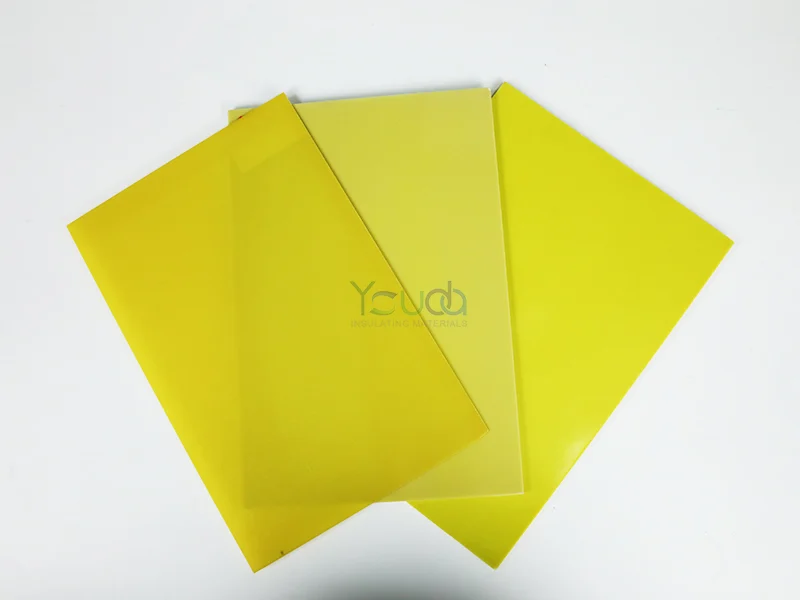
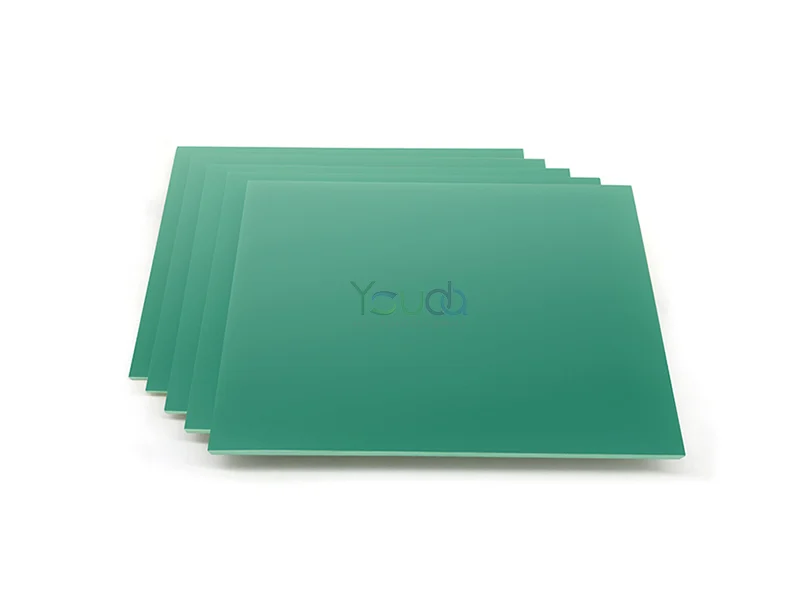
G10 epoxy sheet is widely known for its exceptional strength, dimensional stability, and electrical insulation. It is a staple material in aerospace, electronics, and industrial machinery. Yet, behind its reliability lies a less discussed but absolutely crucial fact: G10’s performance does not come simply from the combination of fiberglass cloth and epoxy resin. Instead, it is the synergy of pressure and heat during the lamination and curing process that transforms raw materials into a high-performance composite.
In this article, we will explore why G10 epoxy sheet lamination pressure control and a carefully designed epoxy curing temperature profile are decisive in creating a void-free, reliable insulation material.
- The Role of Pressure in G10 Manufacturing
1. Eliminating Voids for Electrical Integrity
One of G10’s primary uses is as a void-free G10 insulation material in high-voltage applications. Any microscopic voids or air pockets between fiberglass layers can become weak points under electrical stress. Controlled lamination pressure ensures that epoxy resin thoroughly penetrates fiber bundles, removing trapped air and delivering consistent dielectric strength.
2. Balancing Resin-to-Fiber Ratio
Too little pressure leaves dry spots where fibers are insufficiently bonded. Too much pressure squeezes resin out of the laminate, leading to brittle layers. This is why manufacturers emphasize lamination pressure control: the optimal range ensures proper resin distribution, preventing weak zones and guaranteeing long-term reliability.
3. Achieving Dimensional Stability
Flatness and thickness accuracy are critical for CNC machining. Without proper pressure, G10 sheets may warp or develop layer shifts. Stable and uniform pressure results in G10 sheet dimensional stability, a feature especially valued in precision engineering.
- The Role of Heat in Epoxy Sheet Curing
1. Driving the Chemical Cross-Linking Reaction
Epoxy resin curing is not about drying—it is a chemical transformation. Heat initiates cross-linking, turning liquid resin into a three-dimensional network. If the epoxy curing temperature profile is too low, under-curing occurs; if too high, thermal degradation sets in. Correct heat cycles ensure mechanical strength and moisture resistance.
2. Controlling Viscosity for Resin Flow
At the beginning of curing, resin must flow into the fiber bundles. Heat reduces viscosity, allowing complete wetting. Later, higher temperatures trigger cross-linking and hardening. A carefully staged epoxy curing temperature profile balances flow and solidification.
3. Managing Thermal Stresses
Because fiberglass and epoxy expand differently, improper heating or cooling can generate residual stress. Controlled heating ramps and cooling cycles minimize internal stress, improving service life in demanding environments.
- Pressure and Heat: The Synergistic Duo
G10’s structural integrity comes not from pressure or heat alone, but from their synergistic action in hot pressing.
Pressure without heat → resin infiltration occurs, but no cross-linking.
Heat without pressure → curing happens, but voids remain.
Hot pressing in composite manufacturing → resin wets the fibers, voids disappear, and chemical curing creates a dense, high-strength sheet.
This synergy is why hot pressing in composite manufacturing is considered the gold standard for producing G10.
- Application-Driven Adjustments
Not all G10 epoxy sheets are produced under identical conditions. Manufacturers fine-tune lamination pressure control and epoxy curing temperature profiles depending on the application:
Electrical insulation panels → extended cure cycles and steady pressure for high dielectric strength.
Load-bearing components → controlled cooling to improve toughness.
Precision-machined parts → gradual heating ramps to enhance dimensional stability.
By treating heat and pressure as tunable parameters, manufacturers essentially “program” the properties of the final material.
- Why This Matters Beyond the Factory
For engineers and procurement specialists, knowing how lamination pressure and curing temperature profiles affect performance is vital. It explains why:
G10 sheets from different suppliers may vary greatly in reliability.
Price differences often reflect process precision, not just raw materials.
In critical applications, asking about hot pressing procedures and curing cycles is as important as checking datasheets.
- Frequently Asked Questions (FAQ)
Q1: Why can’t G10 be made without pressure?
Without pressure, voids remain inside the laminate. This reduces strength and insulation performance.
Q2: Why is temperature control so important in curing?
Because epoxy resin requires a carefully staged temperature profile to cross-link fully without degrading.
Q3: Does higher pressure and heat always mean better G10?
Not always. Excess pressure squeezes resin out, and excess heat creates thermal stress. Balance is key.
Q4: What happens if G10 is under-cured?
Under-cured laminates absorb moisture, weaken mechanically, and lose dielectric reliability.
- Conclusion
G10 epoxy sheet is not just fiberglass and resin—it is the outcome of precise pressure control and optimized curing temperature profiles. Pressure ensures density, resin uniformity, and dimensional stability. Heat drives cross-linking, reduces viscosity, and manages thermal stress. Together, through hot pressing in composite manufacturing, they create a material trusted across industries.
In composite manufacturing, materials may share formulas, but it is process mastery that creates performance. In G10, pressure and heat are not supporting factors—they are the soul of the material.
★ Recommended Reading:
Curing Techniques in G10 Epoxy Sheet Production Explained
If you need detailed information about related products, you can let me know via online chat, email, WhatsApp, or any other method, and we will contact you on the same day to solve your problem.