Information Details
Youda insulation material manufacturer regularly updates insulation product information and company news to keep you informed of the latest developments and industry trends.
What is the difference between the Fr4 fiberglass board and the G10 epoxy board?
FR4 fiberglass and G10 epoxy boards, based on a laminated fiberglass cloth and epoxy resin structure, occupy a pivotal position in the electronic, electrical, and mechanical industries. While both are similar in some properties, there are some significant differences. Below are the key differences between FR4 fiberglass board and G10 epoxy board:
- 1.Definition and Flame Retardancy
FR4 Fiberglass: The “FR” stands for “Flame Retardant”, indicating that it has excellent flame retardant properties and effectively prevents combustion at high temperatures or in an ignition source environment.
G10 Epoxy Board: The “G” stands for glass fiber, and the number “10” indicates that the glass fiber content reaches 10%, and this board is not flame retardant.
- 2.Usage environment
FR4: It is commonly used in environments with high safety requirements, such as electronic equipment, computers, communication equipment, and other areas that require fire protection.
G10: It is mainly used in applications that do not require flame-retardant properties, such as mechanical parts and tool handles.
- 3.Material Certifications and Standards
FR4: Usually complies with international standards such as UL 94 V-0 and has a high flame retardant rating, so it is widely used in applications with strict safety standards.
G10: Without flame retardant certification, G10 is more commonly used in environments where mechanical strength and electrical insulation are the primary considerations.
- 4.Application Areas
FR4: Thanks to its flame-retardant properties, FR4 is particularly common in the manufacture of printed circuit boards (PCBs), especially in electronic devices with high-reliability requirements.
G10: It is more often found in industrial and consumer products, such as machine parts, hand tools, sports equipment, etc.
- 5.Price and Availability
FR4: Due to its flame retardant properties and wide range of applications, its price is usually slightly higher than that of G10.
G10: It has some cost advantages and is especially suitable for applications that do not require special flame retardant properties.
- 6.Color and Appearance
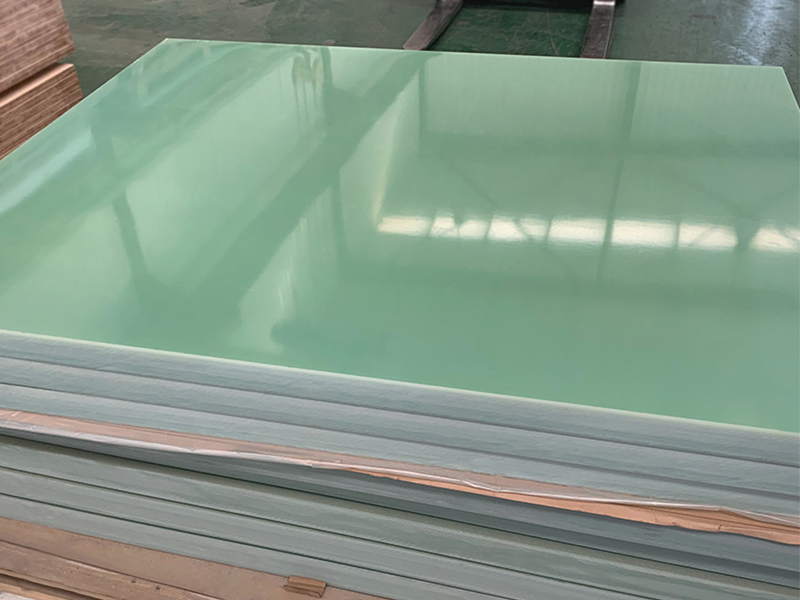
FR4: Usually yellowish or greenish, especially when used as PCB, green appearance is particularly common.
G10: Color options are more diverse, including black, green, beige, etc., especially in tool handles and tools.
- Summary
Although FR4 and G10 are similar in terms of mechanical and electrical properties, FR4 is more popular in applications requiring strict safety standards due to its excellent flame-retardant properties, while G10 is widely used in applications where flame-retardant properties are not required due to its good mechanical properties and cost-effectiveness. When choosing a material, the decision needs to be made in the context of the specific application and performance requirements.
If you need detailed information about related products, you can let me know via online chat, email, WhatsApp, or any other method, and we will contact you on the same day to solve your problem.