Information Details
Youda insulation material manufacturer regularly updates insulation product information and company news to keep you informed of the latest developments and industry trends.
Is FR4 the same as G-10?
FR4 and G-10, as two composite materials based on fiberglass and resin, have similar basic compositions, but they have significant differences in performance, application and characteristics. Below, we’ll dive into the main differences between these two materials.
- 1.Material composition and naming
FR4: The full name is FR-4 epoxy glass cloth laminate, which is the preferred material for PCB (printed circuit board) substrate. It is perfectly combined with high-quality fiberglass cloth and epoxy resin to exhibit excellent mechanical and electrical properties.
G-10: This is a unique fiberglass and resin laminate composite material. Among them, “G” represents glass fiber, and “10” indicates that its glass fiber content is relatively high. G-10 has been widely used in many fields due to its excellent physical and chemical properties.
- 2.Appearance characteristics
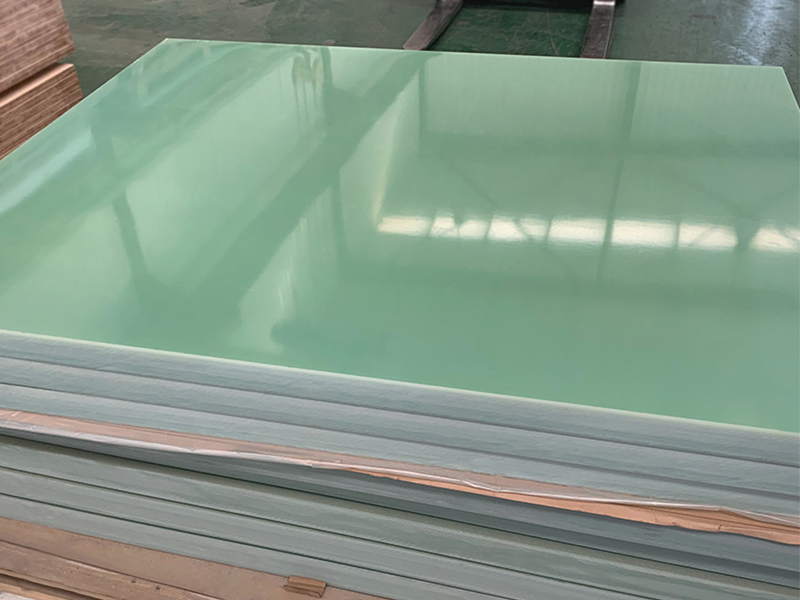
FR4: The common color is dark yellow or green. Its surface is smooth and smooth, and the fibers are evenly distributed, showing the high quality and stability of the material.
G-10: Available in a variety of colors, including black, red, blue, and green, the surface is equally smooth, but the texture may present a different aesthetic depending on fiber arrangement and resin formula.
- 3.Thermal stability
FR4: Known for its excellent thermal stability and heat resistance, it can maintain stable physical and electrical properties in high temperature environments and is suitable for various electronic and electrical applications.
G-10: It also has excellent thermal stability and can withstand extreme temperatures and mechanical stress, ensuring reliability in various complex environments.
- 4.Mechanical behavior
FR4: High mechanical strength, good rigidity, and a certain degree of flexibility. It is easy to be processed into various shapes and structures to meet diverse design needs.
G-10: Excellent mechanical properties, especially its tensile and compressive strength, making it the material of choice for manufacturing high-strength components such as knives, molds, and jigs.
- 5.Electrical properties
FR4: It has excellent electrical insulation properties and can withstand high voltage and current. It is a key material for manufacturing electrical products such as electronic equipment and circuit boards.
G-10: Although it also has good electrical insulation properties, its main use is more focused on mechanical and physical properties.
- 6.Chemical stability
FR4: It has good resistance to most chemicals such as acids, alkalis and organic solvents, and can maintain stable performance in various harsh environments.
G-10: Also has excellent chemical stability, but its specific chemical resistance may vary depending on the formulation and use environment.
- 7.Application areas
FR4: Widely used in the electronics, electrical and communication industries, such as the manufacturing of key components such as circuit boards, motors and transformers.
G-10: Mainly used in fields with high strength and high temperature requirements such as aerospace, automobiles and machinery, as well as in the manufacturing of components such as cutting tools, molds and fixtures.
- 8.Processing and manufacturing
FR4: Easy to process and manufacture, supports a variety of processing methods, such as cutting, drilling, stamping and milling, etc., which facilitates the manufacturing of complex shapes and structures.
G-10: It also supports a variety of processing methods, but due to its higher hardness, more professional equipment and tools may be required for processing.
If you need detailed information about related products, you can let me know via online chat, email, WhatsApp, or any other method, and we will contact you on the same day to solve your problem.