Information Details
Youda insulation material manufacturer regularly updates insulation product information and company news to keep you informed of the latest developments and industry trends.
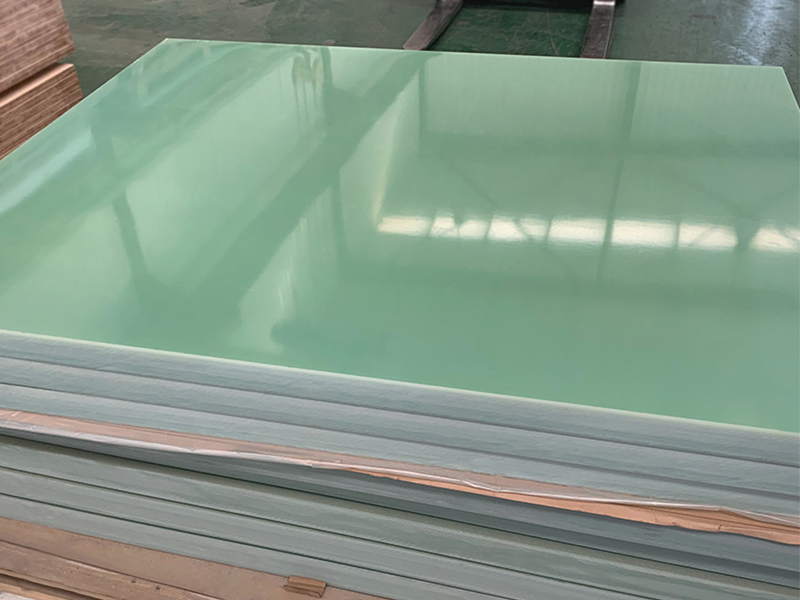
FR4 fiberglass board:Multidimensional Model Classification and High-Performance Application Analysis
By international standards, the classification of FR4 fiberglass boards is a complex and multifaceted topic. It is influenced not only by international standard organizations (such as ISO) but also by multiple standard agencies, industry associations, and manufacturers’ standards. This diversity allows FR4 fiberglass boards to have a broad application base in the electronics industry and meet specific needs in different scenarios. Below is a comprehensive discussion of the classification of FR4 fiberglass board models, integrating various classification methods and practical application situations.
- 1. Classification by Fiberglass Weave Naming
A notable classification method for FR4 fiberglass boards is based on the weave type and style of the fiberglass cloth used internally. Types such as 106, 1067, 1080, 1078, 2116, 2113, 3313, 7628, etc., are well-defined in the IPC (Institute for Interconnecting and Packaging Electronic Circuits) standards. These numbers represent specific weave patterns and ensure consistency in performance across manufacturers producing the same type of fiberglass cloth, all adhering to IPC standards.
- 2. Classification by Resin System and Performance
FR4 fiberglass boards are also classified by suppliers according to their specific resin systems and product performance characteristics. For example, the Iteq series from Iteq includes models like IT180A, IT170GRA1, IT958G, IT968, IT968SE, IT988GSE, among others; the Tuc series from TUC covers models like Tu862HF, Tu872LK, Tu872SLK, Tu872SLK-SP, Tu883, Tu933+, and so on; while Panasonic offers the Megtron series including Megtron4, M4S, Megtron6, M6G, M7E, M7NE. These models reflect the unique resin formulations, performance optimizations, and diverse application scenarios from each supplier.
- 3. Classification by Flame Retardancy
FR4 fiberglass boards are further classified by their flame retardancy, divided into flame-retardant and non-flame-retardant categories. Flame-retardant FR4 boards (e.g., those meeting UL94-VO, UL94-V1 ratings) can quickly self-extinguish when burning, offering higher safety; non-flame-retardant types (e.g., UL94-HB rating) do not have this characteristic. This classification is crucial for the safe design and application of electronic products.
- 4. Classification by Loss Characteristics
Loss characteristics are also a critical basis for classifying FR4 fiberglass boards. Based on the material’s dissipation factor (Df), FR4 boards can be divided into standard loss materials (Df≥0.02), mid-loss materials (0.01<Df<0.02), low-loss materials (0.005<Df<0.01), and ultra-low loss materials (Df<0.005). The smaller the Df value, the lower the material’s loss and the better its performance, particularly suitable for high-frequency, high-speed signal transmission, and other high-end applications.
- 5. Classification by Application Environment
(1) Standard FR4:
- The most common type of FR4 fiberglass board, suitable for most general applications.
- It has good mechanical strength, electrical properties, and heat resistance.
(2) Halogen-Free FR4:
- Free of halogens, meeting environmental requirements.
- Suitable for applications with higher environmental protection requirements, such as green designs in electronic products.
(3) High TG FR4:
- Glass transition temperature (TG) is higher than standard FR4, usually above 170°C.
- Suitable for high-temperature environments or applications requiring higher thermal stability.
(4) FR4/FR5:
- FR5 is an improved version of FR4, with higher heat resistance, suitable for more demanding thermal environments.
- FR5’s glass transition temperature is typically above 170°C, with better mechanical properties at high temperatures.
(5) FR4/Polyimide:
- Combines the properties of FR4 and polyimide, with higher heat resistance and excellent electrical properties.
- Suitable for applications requiring high electrical performance and high-temperature environments.
(6) FR4/BT Epoxy:
- Combines the properties of FR4 and BT epoxy resin, with better mechanical properties and heat resistance.
- Suitable for applications requiring high strength and thermal stability.
(7) FR4/Lad-Free:
- Designed for lead-free soldering processes, able to withstand higher soldering temperatures.
- Suitable for electronic products complying with RoHS directives.
- Conclusion
In summary, the classification of FR4 fiberglass boards is a multidimensional and multi-layered process involving fiberglass weave, resin systems, flame retardancy, loss characteristics, and other properties. In practical applications, users should select the appropriate model and type of FR4 fiberglass board based on specific needs and the information provided by suppliers. As technology and the market continue to evolve, the models and classification methods for FR4 fiberglass boards will also continue to update and expand, offering more diversified and high-performance product choices for users.
If you need detailed information about related products, you can let me know via online chat, email, WhatsApp, or any other method, and we will contact you on the same day to solve your problem.