Information Details
Youda insulation material manufacturer regularly updates insulation product information and company news to keep you informed of the latest developments and industry trends.
What Are the Different Types of Fiberglass Sheets Available?
Fiberglass sheets, known for their exceptional strength, versatility, and lightweight nature, are integral in various industries, including construction, automotive, marine, and aerospace. These sheets are manufactured by weaving glass fibers into a fabric and then binding them with a resin, resulting in a composite material that exhibits remarkable properties. There are several types of fiberglass sheets, each designed for specific applications and offering unique advantages. This essay delves into the different types of fiberglass sheets available, their characteristics, and their applications.
- 1.General-Purpose Fiberglass Sheets
General-purpose fiberglass sheets, often referred to as E-glass (electrical grade glass) sheets, are the most commonly used type. They are made from boron-free glass fibers and offer excellent electrical insulation properties, making them suitable for electrical and electronic applications. These sheets are known for their high strength-to-weight ratio, good thermal stability, and resistance to moisture and chemicals. They are widely used in construction, electrical insulation, and automotive components.
- 2.S-Glass Fiberglass Sheets
S-glass (structural glass) fiberglass sheets are renowned for their superior strength and stiffness compared to E-glass sheets. They are made from a different type of glass fiber that contains a higher percentage of silica. This composition provides S-glass sheets with enhanced mechanical properties, including higher tensile strength and modulus of elasticity. Due to these characteristics, S-glass fiberglass sheets are often used in high-performance applications such as aerospace, military, and sporting goods, where maximum strength and durability are crucial.
- 3.C-Glass Fiberglass Sheets
C-glass (chemical glass) fiberglass sheets are designed to offer excellent resistance to chemical corrosion. They are made from glass fibers that contain a higher percentage of alkali-resistant components, making them suitable for environments exposed to aggressive chemicals and harsh conditions. These sheets are commonly used in chemical processing plants, storage tanks, and pipelines where resistance to chemical attack is paramount.
- 4.A-Glass Fiberglass Sheets
A-glass (alkali glass) fiberglass sheets are similar to E-glass sheets but contain a higher percentage of alkali materials. While they offer good electrical insulation properties, their primary advantage lies in their ability to withstand alkaline environments. A-glass sheets are often used in applications where the material will be exposed to high pH levels, such as in cement and concrete reinforcement.
- 5.High-Temperature Fiberglass Sheets
High-temperature fiberglass sheets are specially formulated to withstand extreme heat. They are typically made from glass fibers combined with high-temperature-resistant resins. These sheets can endure temperatures up to 1,000°F (538°C) or higher, making them ideal for applications in furnaces, kilns, and heat shields. They are also used in industries such as aerospace and automotive, where components must perform reliably under high-temperature conditions.
- 6.Fire-Retardant Fiberglass Sheets
Fire-retardant fiberglass sheets are designed to resist ignition and inhibit the spread of flames. These sheets are made by incorporating fire-retardant additives into the resin or using special fire-resistant resins. They are commonly used in building and construction applications, particularly in areas where fire safety is a priority, such as walls, ceilings, and partitions. Fire-retardant fiberglass sheets provide an added layer of safety by slowing down the progression of a fire, allowing more time for evacuation and firefighting efforts.
- 7.UV-Resistant Fiberglass Sheets
UV-resistant fiberglass sheets are engineered to withstand prolonged exposure to ultraviolet (UV) radiation without degrading. UV rays can cause conventional fiberglass sheets to become brittle, discolored, and lose their structural integrity over time. UV-resistant sheets are treated with UV stabilizers or coatings to protect them from the damaging effects of sunlight. These sheets are commonly used in outdoor applications, such as roofing, cladding, and signage, where they are exposed to direct sunlight.
- 8.Marine-Grade Fiberglass Sheets
Marine-grade fiberglass sheets are specifically designed for use in marine environments. They are formulated to resist water absorption, saltwater corrosion, and the growth of mold and mildew. These sheets are commonly used in the construction and repair of boats, yachts, and other marine vessels. Marine-grade fiberglass sheets provide excellent durability and longevity, even in the harsh conditions of the open sea.
- 9.G10 Fiberglass Sheets
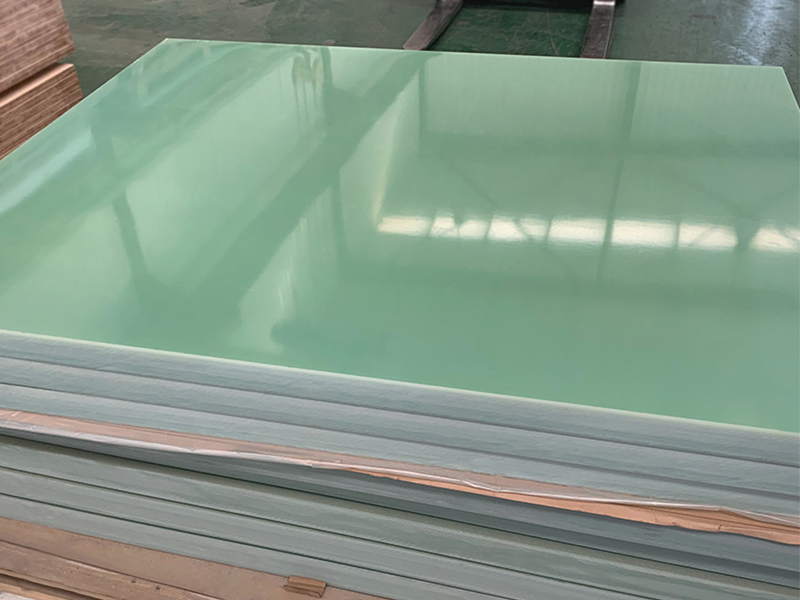
G10 fiberglass sheets are a type of high-pressure fiberglass laminate, created by layering multiple sheets of glass cloth and soaking them in epoxy resin. The result is a dense, strong, and durable material with excellent electrical insulating properties. G10 sheets are widely used in the electronics industry for making circuit boards, as well as in the production of knife handles, aerospace components, and other precision parts that require high mechanical strength and stability.
- 10.FR4 Fiberglass Sheets
FR4 fiberglass sheets are similar to G10 sheets but are specifically designed to meet flame retardancy standards. The “FR” in FR4 stands for “flame retardant,” and these sheets are used primarily in the electronics industry for printed circuit boards (PCBs). FR4 sheets are composed of woven fiberglass cloth with an epoxy resin binder that is flame retardant. They offer a good balance of mechanical, electrical, and thermal properties, making them suitable for a wide range of electronic applications.
- Conclusion
Fiberglass sheets come in various types, each tailored to meet specific requirements and applications. General-purpose E-glass sheets are the most widely used due to their excellent balance of properties, while S-glass sheets offer superior strength for high-performance applications. C-glass and A-glass sheets are specialized for chemical resistance and alkaline environments, respectively. High-temperature and fire-retardant sheets provide additional safety and durability under extreme conditions. UV-resistant and marine-grade sheets ensure longevity and reliability in outdoor and marine environments. G10 and FR4 sheets cater to the precise demands of the electronics industry. Understanding the different types of fiberglass sheets and their unique properties is crucial for selecting the right material for any given application, ensuring optimal performance and longevity.
If you need detailed information about related products, you can let me know via online chat, email, WhatsApp, or any other method, and we will contact you on the same day to solve your problem.