
Information Details
Youda insulation material manufacturer regularly updates insulation product information and company news to keep you informed of the latest developments and industry trends.
Top 7 Myths About G10 Fiberglass Sheet You Should Stop Believing
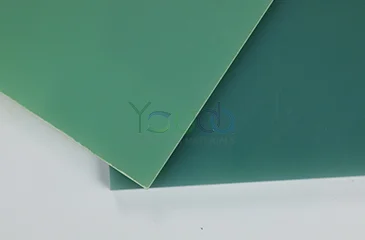
G10 fiberglass sheet is a high-performance industrial material renowned for its exceptional strength, durability, and electrical insulation properties. It is a composite laminate made from continuous glass fiber fabric impregnated with an epoxy resin binder, cured under high pressure and temperature. This process results in a rigid, strong, and moisture-resistant sheet material. Widely used in applications ranging from printed circuit boards (PCBs) and electrical insulators to knife handles and precision engineering components, G10 has earned a reputation for reliability. However, despite its prevalence in technical fields, numerous misconceptions and myths surround this versatile material. These myths can lead to improper material selection, suboptimal performance, and even project failures. This article aims to debunk the top seven most persistent myths about G10 fiberglass sheet, providing clarity and deep technical insights to engineers, designers, manufacturers, and enthusiasts alike.
- Myth 1: G10 is Just a Fancy Plastic
The Reality: This is perhaps the most common and damaging misconception. Equating G10 to standard plastics like acrylic, polycarbonate, or PVC is a significant oversimplification.
Fundamental Difference in Composition: While both are polymers, their structures are worlds apart. Common plastics are thermoplastics; they soften when heated and can be remolded. G10, however, is a thermoset composite. The epoxy resin undergoes an irreversible chemical reaction during curing (polymerization), creating a rigid, cross-linked molecular structure that cannot be re-melted.
The Reinforcement Factor: The most critical distinction is the continuous glass fiber fabric reinforcement. This isn’t a filler; it’s a structural skeleton. The glass fibers provide immense tensile strength and dimensional stability, while the epoxy resin matrix distributes stress, protects the fibers, and provides compressive strength. This synergy creates a material with mechanical properties (strength-to-weight ratio, stiffness) that far exceed those of any common thermoplastic and even rival some metals.
Performance Gap: Plastics like PVC or nylon will creep (deform under constant load), have lower continuous service temperatures, and are more susceptible to chemical attack and UV degradation. G10 maintains its shape under load, handles much higher temperatures, and offers superior chemical resistance, especially to solvents.
In summary, calling G10 a “plastic” ignores its composite nature. It is a reinforced engineering material with performance characteristics that place it in a category far above conventional plastics.
- Myth 2: All G10 Sheets are Created Equal
The Reality: Assuming all G10 is identical is a quick path to performance issues. The quality and properties of G10 fiberglass sheet can vary significantly based on the manufacturing process and the raw materials used.
Resin Formulation: The type of epoxy resin used can alter the material’s properties. Some formulations offer higher thermal resistance, improved arc resistance, or better performance in humid environments. Lower-quality resins may be more brittle or have a lower glass transition temperature (Tg).
Glass Fabric Type: The weave style (e.g., plain, satin), the thread count, and the quality of the glass fibers themselves impact the final product’s strength, dimensional stability, and surface finish. A tighter, higher-quality weave provides more consistent mechanical properties.
Manufacturing Process: The critical step is the curing process under heat and pressure. Precise control over pressure, temperature, and cure time is essential to eliminate voids, ensure complete resin impregnation, and achieve full polymerization. Inconsistent or substandard curing can lead to delamination, internal weaknesses, and reduced electrical insulation properties.
Standards and Grades: Reputable manufacturers produce G10 in accordance with standards like NEMA LI 1-1998 or MIL-P-18177, which specify requirements for materials, construction, and performance. “Generic” or non-standard G10 may not meet these stringent criteria.
Therefore, it is crucial to source G10 fiberglass sheet from reputable suppliers who provide certification and data sheets, ensuring the material meets the required specifications for your application.
- Myth 3: G10 is Completely Waterproof
The Reality: While G10 is highly moisture resistant, it is not perfectly waterproof. It is a hygroscopic material, meaning it can absorb trace amounts of moisture from the environment over time.
The Mechanism: The epoxy resin matrix itself is very resistant to water, but moisture can slowly migrate through micro-imperfections and along the interfaces between the glass fibers and the resin.
Impact of Absorption: Even a small amount of absorbed moisture can negatively affect the material’s properties. Most notably, it can reduce its electrical insulation resistance and dielectric strength. In high-voltage or high-frequency applications, this can be a critical design consideration.
Managing the Risk: For most applications, the minimal moisture absorption of properly manufactured G10 is negligible. However, in environments with constant high humidity or direct water immersion, specifying FR4 (the flame-retardant version of G10) might be preferable, as its brominated epoxy resin matrix can sometimes offer slightly different absorption characteristics. For extreme environments, materials like Garolite (phenolic resin) or specialized composites might be evaluated. Proper sealing of edges, which are more susceptible to moisture ingress, can also mitigate this effect.
Understanding this distinction is key for applications where long-term dielectric performance is paramount.
- Myth 4: G10 is Extremely Difficult to Machine
The Reality: G10 is not as easy to machine as softwoods or aluminum, but it is far from impossible. With the right tools and techniques, it can be worked precisely and cleanly. The myth of its difficulty often stems from using incorrect methods.
The Challenge: The abrasive nature of the glass fibers will quickly dull standard high-speed steel (HSS) tools. This leads to overheating, rough edges, and delamination.
The Solution:
Tooling: Use carbide-tipped or solid carbide tools. Carbide is much harder and more resistant to abrasion.
Technique: CNC machining is ideal for precision. For drilling, use a sharp carbide bit with a pecking motion to clear chips and prevent heat buildup. For cutting, use a slow feed rate and high RPM.
Safety: This is non-negotiable. Machining G10 generates fine glass and resin dust, which is a respiratory and skin irritant. Always use appropriate personal protective equipment (PPE) including a respirator (NIOSH N95 or better), safety glasses, and gloves. Use dust collection systems whenever possible.
With proper preparation, machining a G10 fiberglass sheet is a manageable process that yields excellent results, making it a favorite among machinists and fabricators for custom parts.
- Myth 5: G10 and FR4 are Interchangeable Terms
The Reality: While G10 and FR4 are closely related cousins, they are not the same. Using them interchangeably can have serious safety implications.
G10: This is the base material. It offers excellent mechanical and electrical properties but is flammable. It will burn if exposed to a sufficient flame source.
FR4 (Flame Retardant 4): FR4 is essentially a modified version of G10. Its epoxy resin is infused with additives (traditionally bromine) that make it self-extinguishing. When the flame source is removed, FR4 will stop burning. This is measured by standards like UL94-V0.
The Key Takeaway: All FR4 is G10, but not all G10 is FR4. For any application involving electrical circuits or where fire safety is a concern (e.g., electronics enclosures, PCBs, electrical insulation in devices), FR4 is the mandatory and correct choice. G10 is suitable for mechanical applications where flammability is not a primary concern, such as structural spacers, knife handles, or jigs and fixtures.
- Myth 6: G10 Has Poor Temperature Resistance
The Reality: This myth likely arises from comparing it to ceramics or high-temperature plastics like PEEK. In reality, for a glass-epoxy composite, G10 offers very respectable thermal performance.
Continuous Service Temperature: A standard G10 fiberglass sheet can typically operate continuously in environments up to 120-130°C (248-266°F). Specialized formulations can extend this range even higher.
Glass Transition Temperature (Tg): This is a key metric. Tg is the temperature at which the polymer matrix transitions from a hard, glassy state to a softer, rubbery one. Standard G10/FR4 has a Tg around 130°C, but high-Tg grades (e.g., 170°C, 180°C) are available for lead-free soldering processes and high-temperature applications.
Comparison: It vastly outperforms common plastics (e.g., ABS, PVC) and is comparable to or better than many nylons and polycarbonates. While it won’t handle the extreme heat of a ceramic insulator, its combination of mechanical strength, electrical properties, and thermal resistance is what makes it so uniquely useful.
It is accurate to say that thermal management is a design consideration with G10, but to claim it has “poor” resistance is misleading. It is fit-for-purpose across a wide range of demanding environments.
- Myth 7: G10 is Only for Electrical Applications
The Reality: While its origins and a huge portion of its use are in electrical insulation (it’s the classic “green” PCB substrate), this myth severely underestimates the material’s versatility.
The exceptional strength-to-weight ratio, stability, and machinability of G10 fiberglass sheet have made it a star in other fields:
Knifemaking: A premier choice for premium knife handles due to its durability, moisture resistance, and ability to be textured into a secure grip.
Aerospace and Defense: Used for lightweight structural components, brackets, and insulators in avionics.
Precision Manufacturing: Ideal for jigs, fixtures, and go/no-go gauges because it is non-marring, dimensionally stable, and will not rust.
Marine Industry: Used for parts requiring strength and immunity to rot or corrosion in saltwater environments.
Sporting Goods: Found in archery arrow rests, firearm components, and other high-stress accessories.
Its unique blend of properties makes it a “problem-solving” material across engineering disciplines, far beyond its electrical roots.
- Conclusion
Dispelling these myths about G10 fiberglass sheet is crucial for leveraging its full potential. It is not a simple plastic but a high-performance composite. Its quality is not universal, its properties have nuances like moisture absorption, and it can be machined effectively with care. Understanding the critical difference between G10 and FR4 is a matter of safety, and recognizing its capable thermal resistance and vast mechanical applications opens up a world of design possibilities. By moving past these misconceptions, engineers, designers, and makers can make informed decisions, selecting G10 where it truly shines and ensuring their projects are built on a foundation of strength, reliability, and performance.
★ Recommended Reading:
The History and Development of G10 Fiberglass Sheet Technology
If you need detailed information about related products, you can let me know via online chat, email, WhatsApp, or any other method, and we will contact you on the same day to solve your problem.





