Information Details
Youda insulation material manufacturer regularly updates insulation product information and company news to keep you informed of the latest developments and industry trends.
Top Industrial Uses of Epoxy Sheet in 2025
In 2025, the global industrial landscape continues to evolve around smarter, lighter, and more efficient materials. Among them, epoxy sheet remains one of the most versatile composite materials used across multiple industries — from power electronics to aerospace systems. However, while its traditional roles in insulation and mechanical reinforcement are well known, the most transformative growth is happening in high-frequency and signal-integrity applications.
This article explores the top industrial uses of epoxy sheet today, focusing on how its dielectric, mechanical, and thermal properties are being engineered to meet the demands of modern electronics and advanced manufacturing.

1. The Foundation of Modern Electronics
The most extensive industrial use of epoxy sheet in 2025 lies in electronic substrates and insulation systems. As industries transition to higher frequencies, faster data transmission, and compact device architectures, epoxy sheet materials have become essential for printed circuit boards (PCBs) and high-density interconnect structures.
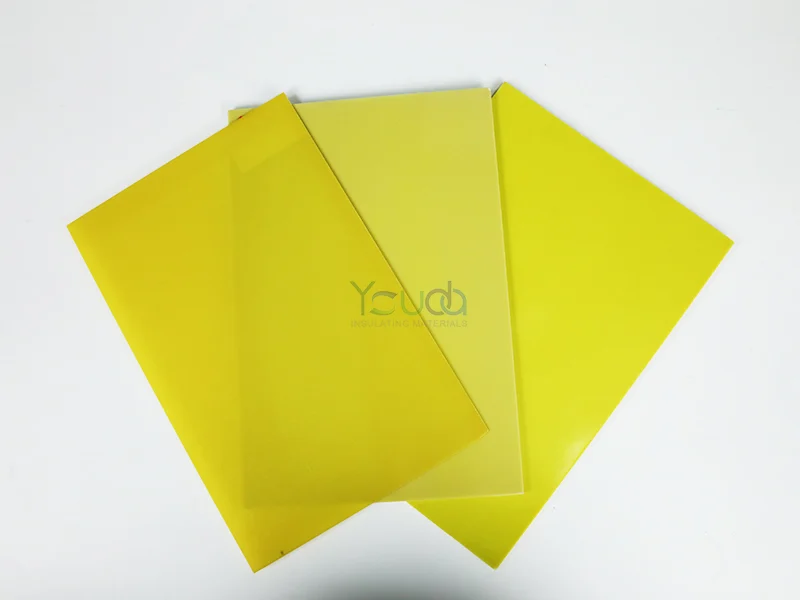
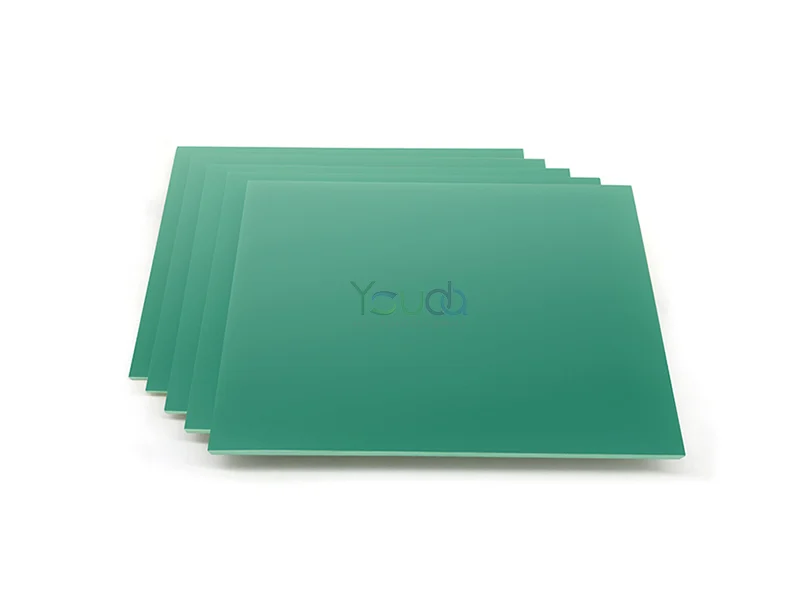
Epoxy glass laminates such as FR-4 and G10 combine electrical insulation with excellent mechanical rigidity. Their low dielectric constant and stable loss factor ensure reliable signal transmission. In high-frequency circuits, small variations in dielectric properties can cause severe signal degradation, making the quality and consistency of epoxy sheets critical.
Manufacturers are responding with refined resin systems and hybrid glass-fiber structures that maintain low dielectric loss even in extreme humidity or elevated temperatures. This evolution allows epoxy sheets to serve as the backbone of high-speed communication devices, 5G/6G infrastructure, and advanced IoT hardware.
2. Insulation and Safety in Power Systems
Another dominant use of epoxy sheet is in electrical insulation for power equipment such as transformers, motors, and switchgear. In these settings, epoxy sheets act as insulating barriers, coil supports, and dielectric spacers. Their high dielectric strength prevents current leakage, while their heat resistance ensures stable operation in continuous load environments.
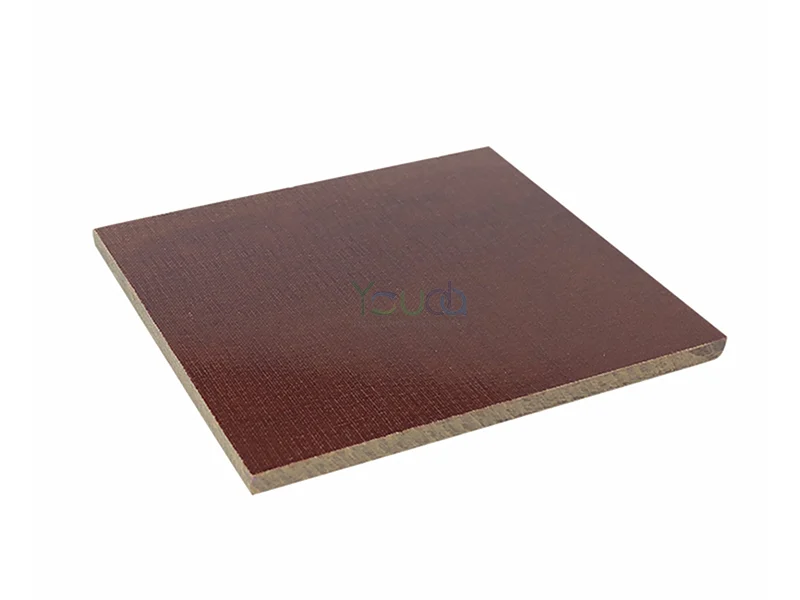
In electric vehicles and renewable energy converters, epoxy sheets play a dual role — providing mechanical reinforcement and ensuring electrical safety in high-voltage environments. Compared with traditional phenolic laminates, epoxy sheet offers superior dimensional stability and longer lifespan under thermal cycling, making it the preferred choice for next-generation power modules.
3. Structural Integrity in Harsh Environments
Epoxy sheet’s chemical and mechanical resilience makes it indispensable in industrial machinery and process equipment. Chemical plants, refineries, and wastewater facilities use epoxy sheets as liners, covers, and paneling where corrosion resistance is essential. The material withstands acids, alkalis, and solvents while maintaining strength at elevated temperatures.
In manufacturing environments, epoxy sheet panels are used in mechanical fixtures, machine bases, and support jigs. Their vibration resistance and machinability make them suitable for precision tools, molds, and production equipment. Because epoxy sheets retain dimensional accuracy after machining, they help reduce calibration time and improve long-term reliability in factory operations.
4. Aerospace and Avionics Engineering
The aerospace sector continues to depend on epoxy sheet composites for their combination of lightweight structure and high performance. Within aircraft, these sheets are used in avionics boards, interior panels, and insulation layers that must meet stringent flame-retardant and low-smoke requirements.
Epoxy sheets are also being integrated into spacecraft and satellite subsystems. Their low outgassing characteristics, thermal stability, and electrical insulation make them ideal for use in the vacuum of space. Engineers often employ epoxy laminates as isolation mounts or support frames in payload assemblies, ensuring reliability in extreme temperature fluctuations and radiation exposure.
5. Renewable Energy and Sustainable Power Systems
With the expansion of renewable energy infrastructure, epoxy sheet is playing a growing role in supporting the transition to clean power. In wind turbine control systems, solar inverters, and energy-storage modules, epoxy sheets serve as insulation layers, circuit substrates, and structural reinforcements.
In battery storage facilities and electric vehicle charging stations, epoxy sheets protect sensitive control electronics from heat and electrical surges. Their flame resistance and low moisture absorption improve system safety and reduce maintenance costs. Moreover, the move toward halogen-free epoxy formulations aligns with global environmental regulations, positioning epoxy sheets as both high-performance and sustainable materials.
6. Transportation and Electrified Mobility
As transportation systems become increasingly electrified, epoxy sheets have found their way into rail, metro, and EV applications. In electric trains, traction converters and power distribution modules rely on epoxy sheet insulation to separate high-voltage conductors. The material’s resistance to vibration, moisture, and arc tracking ensures long service life even under constant motion and electrical stress.
In electric buses and charging networks, epoxy sheet laminates act as structural barriers and protective covers for onboard electronics. The combination of electrical insulation and mechanical strength provides safety without adding significant weight — an essential factor for improving vehicle efficiency.
7. Deep Dive: Epoxy Sheet in High-Frequency Electronics
The most remarkable transformation of epoxy sheet in 2025 lies in high-frequency and signal-integrity applications. As 5G, 6G, and advanced radar systems push operating frequencies into the millimeter-wave range, traditional materials struggle to balance performance, cost, and manufacturability. Epoxy sheet materials, however, are being reengineered to close that gap.
7.1 Dielectric Precision
In high-frequency circuits, the dielectric constant (Dk) and loss tangent (Df) determine signal quality. Engineers now fine-tune epoxy resin formulations and adjust glass-fiber weaves to reduce loss while keeping processability high. Low-loss epoxy sheets maintain stable dielectric properties across wide temperature and humidity ranges, ensuring consistent impedance control for GHz-level signals.
7.2 Thermal Management
With denser circuits and smaller form factors, heat dissipation becomes a key challenge. Modern epoxy sheets incorporate thermally conductive additives such as alumina or boron nitride, which improve heat transfer without compromising electrical insulation. This combination is critical for high-power RF amplifiers and base-station modules.
7.3 Nano-Engineered Performance
Nanocomposite epoxy sheets, containing finely dispersed fillers or graphene-based additives, are emerging as a breakthrough trend. These micro-reinforcements improve both dielectric and mechanical properties, enabling epoxy sheets to perform on par with specialty laminates traditionally used for RF boards.
7.4 Manufacturing Compatibility
Unlike exotic materials that require special fabrication, epoxy sheet remains compatible with existing PCB processes — from laser drilling to multilayer lamination. This balance between performance and cost efficiency gives it a unique advantage in commercial electronics production.
8. Innovations and Future Trends
In 2025 and beyond, several innovations are shaping the evolution of epoxy sheet:
Halogen-Free Formulations: Environmental regulations are driving the shift toward eco-friendly epoxy systems that maintain flame resistance without halogen additives.
Hybrid Laminates: Engineers are combining epoxy with ceramic or PTFE layers to create hybrid materials offering ultra-low dielectric loss and improved thermal conductivity.
Smart Curing Systems: Advanced curing methods using real-time monitoring help control crosslink density, ensuring uniform mechanical and dielectric performance.
3D-Printed Epoxy Structures: Additive manufacturing techniques are emerging, allowing complex epoxy sheet geometries and custom dielectric gradients for specialized applications.
These innovations position epoxy sheet as a future-ready material — not static, but dynamically evolving with industrial demands.
9. Strategic Value for Industry
The versatility of epoxy sheet offers strategic advantages for industries seeking reliability and scalability.
For electronics manufacturers, it provides a cost-effective substrate for complex circuits.
For energy companies, it ensures insulation stability under harsh operating conditions.
For aerospace engineers, it delivers a lightweight yet durable alternative to metal reinforcements.
Its ability to adapt — through formulation, reinforcement, and processing innovation — is what makes epoxy sheet indispensable in 2025’s industrial ecosystem.
Conclusion
From traditional insulation boards to the frontier of high-frequency electronics, epoxy sheet has proven to be more than a supporting material — it is an enabler of progress. Its combination of electrical precision, mechanical strength, and environmental resilience positions it at the center of industrial transformation.
As industries pursue higher performance and sustainability, epoxy sheet will continue to evolve — thinner, stronger, and more intelligent — meeting the demands of the next technological decade with reliability and innovation.
★★★ Recommended Reading:
How to Identify High-Quality Epoxy Sheet: Buyer’s Guide
If you need detailed information about related products, you can let me know via online chat, email, WhatsApp, or any other method, and we will contact you on the same day to solve your problem.