
Information Details
Youda insulation material manufacturer regularly updates insulation product information and company news to keep you informed of the latest developments and industry trends.
Fire Resistance of Epoxy Sheet: Standards and Testing Methods
In high-performance engineering and industrial design, epoxy sheet materials play a critical role due to their exceptional mechanical strength, dimensional stability, and insulation properties. However, when applied in environments exposed to elevated temperatures or potential ignition sources, their fire resistance becomes a defining factor for safety and reliability. Understanding how epoxy sheet performs under fire conditions — and how it is evaluated — requires a deep look into the standards and testing methods that define its fire-retardant capabilities.
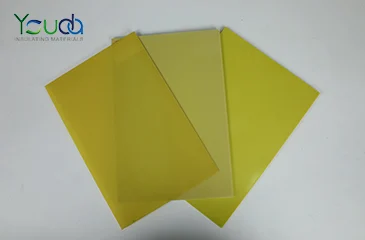
1. The Composition Behind Fire Resistance
An epoxy sheet is typically composed of thermosetting epoxy resin reinforced with glass fiber, carbon fiber, or other fillers. The base epoxy resin provides structural rigidity and chemical resistance, while fillers enhance electrical insulation or mechanical strength. However, in its unmodified state, epoxy resin is combustible. To achieve fire resistance, formulations are enhanced through several specialized mechanisms:
Halogen-free flame retardants, such as phosphorus- or nitrogen-based compounds, which promote charring rather than combustion.
Metal hydroxides (e.g., aluminum trihydrate, magnesium hydroxide) that release water when heated, absorbing heat and diluting combustible gases.
Ceramic and silica fillers, which form a thermal barrier during exposure to flame.
This synergy between resin chemistry and filler selection defines how an epoxy sheet will behave during ignition, flame spread, and heat release.
2. The Science of Fire Retardancy in Epoxy Sheet
The fire resistance of epoxy sheet is not solely a matter of whether it burns; it is a function of how it reacts to heat and how effectively it prevents flame propagation. When exposed to a heat source, epoxy undergoes thermal decomposition, releasing volatiles that can sustain combustion. Flame-retardant additives modify this reaction by promoting the formation of a carbonaceous char layer, which serves as a physical and chemical barrier between the heat source and the underlying polymer matrix.
Two major phenomena define the material’s performance:
Heat Release Rate (HRR): The measure of how much energy the epoxy sheet emits as it burns. A lower HRR signifies better fire resistance.
Limiting Oxygen Index (LOI): The minimum oxygen concentration that supports combustion. Epoxy sheets with LOI above 28% are considered self-extinguishing.
These parameters are key metrics in the evaluation of fire-resistant epoxy sheets, and they form the foundation for standardized testing protocols.
3. International Standards Governing Fire Resistance
Fire testing standards ensure consistency, comparability, and regulatory compliance. For epoxy sheet materials, several globally recognized standards exist across electrical, construction, and aerospace industries. The most relevant include:
UL 94 (Underwriters Laboratories) – The most widely used flammability standard for plastics. It classifies materials based on their burning behavior in vertical and horizontal orientations.
IEC 60695-11 Series – Focuses on flame spread and glow-wire ignition characteristics for electrical and electronic applications.
ASTM E84 (Surface Burning Characteristics) – Measures flame spread and smoke development for building materials.
EN 45545-2 (Railway Applications) – Specifies fire safety requirements for materials used in rail vehicles, including composite epoxy sheets.
ISO 5660 (Cone Calorimeter Test) – Evaluates heat release rate and smoke production under controlled radiant heat exposure.
Each of these standards targets specific end-use conditions, making the selection of the appropriate testing method essential for accurate classification and certification of epoxy sheet performance.
4. The UL 94 Test: Benchmark for Electrical Epoxy Sheet
Among all standards, UL 94 remains the benchmark for epoxy sheets used in electrical insulation and PCB substrates. It evaluates how quickly a sample self-extinguishes after being exposed to a small open flame. The main classifications are:
V-0: The material stops burning within 10 seconds with no dripping.
V-1: The material stops burning within 30 seconds, limited dripping allowed.
V-2: Similar to V-1 but allows flaming drips.
HB: The slowest classification; horizontal burning rate is measured.
An epoxy sheet achieving UL 94 V-0 certification demonstrates superior self-extinguishing properties and minimal heat emission, making it suitable for electrical housings, switchgear, and aerospace structures. The standard not only validates material safety but also provides a marketing advantage — products with UL 94 ratings are globally recognized for reliability.
5. Advanced Testing: Cone Calorimeter and LOI Methods
While UL 94 focuses on ignition behavior, cone calorimeter testing (ISO 5660) provides a more comprehensive analysis of how epoxy sheet behaves in a realistic fire scenario. This method measures the heat release rate (HRR), smoke density, time to ignition, and mass loss rate under radiant heat flux.
The cone calorimeter is often considered the gold standard in research and development because it quantifies material flammability in energy terms (kW/m²). By analyzing the HRR curve, engineers can optimize resin composition and flame-retardant loading to balance performance, cost, and weight.
Complementary to this is the Limiting Oxygen Index (LOI) test (ASTM D2863), which determines the oxygen concentration needed to sustain combustion. Epoxy sheets with higher LOI values are more fire-retardant. For example, a halogen-free epoxy sheet may exhibit LOI values of 30–35%, indicating excellent self-extinguishing behavior without toxic halogen emissions.
6. Fire Resistance vs. Thermal Stability
Fire resistance is often conflated with thermal stability, but these are distinct properties. Thermal stability refers to the material’s ability to maintain its structure and function at elevated temperatures without decomposing, while fire resistance measures its ability to resist ignition and flame spread. An epoxy sheet can have excellent thermal stability yet still fail a flammability test if it lacks proper flame-retardant additives.
In high-voltage environments, such as transformers or PCB laminates, both attributes must coexist. A fire-resistant epoxy sheet ensures that even if overheating occurs, the material will not propagate flames, thereby protecting adjacent components and personnel.
7. Innovations in Fire-Resistant Epoxy Sheet Technology
Modern research is pushing the limits of epoxy sheet fire performance through nanotechnology and green chemistry. Several trends have emerged:
Phosphorus-nitrogen synergy: A non-halogen system where phosphorus promotes char formation while nitrogen releases inert gases that dilute flammable volatiles.
Graphene and nanoclay fillers: Create tortuous pathways for heat and gas transfer, enhancing insulation and delaying ignition.
Intumescent coatings: Expand when heated, forming a foam-like protective barrier that prevents oxygen penetration.
Bio-based epoxy resins: Derived from plant oils or lignin, offering sustainability without compromising fire performance.
These advances are particularly valuable in aerospace and electronics, where lightweight yet fire-safe materials are essential for compliance with increasingly stringent regulations.
8. Testing Beyond Standards: Real-World Fire Scenarios
While laboratory tests quantify performance under controlled conditions, real-world applications expose epoxy sheets to complex variables — electrical arcs, mechanical stress, and variable heat sources. Engineers therefore conduct scenario-based fire tests, such as:
Arc tracking resistance for electrical insulation sheets.
Thermal cycling and flame exposure for aerospace composites.
Smoke toxicity analysis, assessing the release of carbon monoxide and other harmful gases.
By combining standardized testing with real-use validation, manufacturers ensure that epoxy sheet materials perform reliably even in unpredictable fire events.
9. Interpreting Fire Test Results for Material Selection
Understanding fire test data allows engineers to select epoxy sheet grades optimized for their specific application. For instance:
A UL 94 V-0, LOI 32% epoxy sheet is ideal for electrical panels where ignition risk is high.
A cone calorimeter HRR below 100 kW/m² indicates suitability for transportation interiors.
A high char yield (>25%) ensures mechanical integrity under fire exposure.
Interpreting these metrics requires expertise, as trade-offs exist between flame retardancy, mechanical strength, and processability. Excessive flame-retardant additives may compromise dielectric strength or brittleness, necessitating careful formulation balance.
10. The Future of Fire Safety in Epoxy Sheet Engineering
The future of epoxy sheet fire resistance lies in intelligent material design — integrating flame-retardant chemistry directly into the polymer backbone, minimizing additive migration, and leveraging machine learning to predict flammability performance. With global safety standards tightening, from RoHS to REACH, manufacturers are prioritizing halogen-free and low-toxicity systems.
Moreover, as electric vehicles, renewable energy systems, and high-density electronics continue to expand, demand for fire-safe epoxy sheets will grow exponentially. Materials that combine thermal endurance, electrical insulation, and proven fire resistance will define the next generation of composite engineering.
Conclusion
Fire resistance is no longer an optional attribute for epoxy sheet — it is a critical design requirement that determines performance, safety, and compliance across industries. Through a combination of chemical innovation, advanced testing, and adherence to global standards, engineers can develop epoxy sheet materials that not only withstand flames but actively contribute to safer, more sustainable systems.
In the evolving landscape of material science, the epoxy sheet stands as a versatile yet demanding candidate — one whose fire resistance continues to be refined through science, precision, and innovation.
★★★ Recommended Reading:
Advanced Epoxy Sheet Applications in Medical Equipment
If you need detailed information about related products, you can let me know via online chat, email, WhatsApp, or any other method, and we will contact you on the same day to solve your problem.





