
Information Details
Youda insulation material manufacturer regularly updates insulation product information and company news to keep you informed of the latest developments and industry trends.
The Future of Insulation: How We're Reinventing Vulcanized Fiber Paper
Market Dynamics: Vulcanized Fiber Paper Supply Chain Under Pressure
Global demand for Vulcanized Fiber Paper has surged by over 18% year-over-year, driven by its expanding role in high-performance insulation across electric vehicles, renewable energy infrastructure, and advanced electronics. This spike has strained an already tight supply chain, pushing lead times beyond 12 weeks in key markets and triggering price increases of 12–20% since early 2025.
Two primary factors underpin this pressure. First, the scarcity of high-purity cellulose feedstock—essential for consistent dielectric and thermal performance—has intensified due to stricter forestry regulations in Northern Europe and North America. Second, new EU and U.S. energy-efficiency mandates now require industrial components to meet tighter thermal resistance standards, accelerating adoption of materials like Vulcanized Fiber Paper that offer both mechanical robustness and low thermal conductivity.
For procurement teams and engineering leads, the message is clear: reactive sourcing is no longer viable. Now is the time to audit your material dependencies, engage with vertically integrated suppliers, and lock in strategic inventory—before volatility deepens.
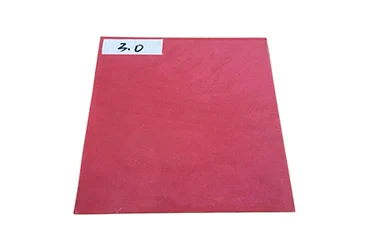
The Future of Insulation: How We're Reinventing Vulcanized Fiber Paper
The current supply crunch surrounding Vulcanized Fiber Paper isn’t just a logistical challenge—it’s a catalyst for innovation. As industries scramble to secure reliable sources of this century-old material, forward-thinking manufacturers and R&D teams are re-examining its fundamental chemistry and structure to unlock unprecedented performance in modern insulation applications. This article explores a rarely discussed but critically important frontier: the molecular-level engineering of Vulcanized Fiber Paper to enhance its thermal stability without compromising its electrical integrity or environmental profile.
Beyond Traditional Lamination: Rethinking Cross-Linking Density
Historically, Vulcanized Fiber Paper derives its name—and its durability—from a zinc chloride-catalyzed gelation process that cross-links cellulose fibers into a dense, homogeneous sheet. While effective for mechanical strength and moisture resistance, this traditional method yields a relatively fixed thermal conductivity range (typically 0.28–0.35 W/m·K), limiting its use in next-generation thermal management systems where sub-0.20 W/m·K performance is increasingly demanded.
Recent advances focus on modulating cross-linking density at the nanoscale. By introducing controlled gradients of sulfonated lignin derivatives during fiber dispersion, researchers have created hybrid networks where aromatic moieties act as thermal “insulators” within the cellulose matrix. These modified zones disrupt phonon transport—the primary heat conduction mechanism in non-metallic solids—without introducing conductive fillers that could compromise dielectric strength.
In practical terms, this means Vulcanized Fiber Paper can now be engineered to achieve thermal conductivity as low as 0.17 W/m·K while maintaining a dielectric breakdown voltage above 15 kV/mm—performance metrics previously thought incompatible in a single-cellulose-based material.
Thermal Aging Resistance: A Hidden Bottleneck in High-Temp Applications
One overlooked limitation of conventional Vulcanized Fiber Paper is its gradual embrittlement under sustained elevated temperatures (>130°C). Over time, residual zinc ions catalyze oxidative degradation of cellulose chains, leading to microcracking and loss of compressive resilience—critical failure modes in EV battery modules or solar inverter housings.
The reinvention lies in ion-exchange post-treatment. After vulcanization, emerging protocols replace residual Zn²⁺ with magnesium or calcium cations through aqueous immersion under mild vacuum. These alkaline earth metals stabilize the glycosidic bonds in cellulose, dramatically slowing thermo-oxidative decay. Accelerated aging tests show treated samples retain over 92% of their original flexural strength after 2,000 hours at 150°C—compared to just 64% for standard grades.
This advancement doesn’t just extend service life; it enables Vulcanized Fiber Paper to qualify for IEC 60674 Class H (180°C) insulation systems, opening doors in aerospace actuators, downhole oil & gas sensors, and high-density power electronics where reliability under thermal stress is non-negotiable.
Compatibility with Additive Manufacturing: Bridging Legacy Material and Digital Fabrication
Perhaps the most transformative angle is the integration of Vulcanized Fiber Paper into hybrid additive manufacturing workflows. While 3D printing dominates headlines, many high-voltage or high-heat components still require planar, layered insulation that printed polymers cannot reliably deliver. The solution? Functional lamination using digitally cut Vulcanized Fiber Paper as precision interlayers.
New surface-functionalization techniques—such as atmospheric plasma grafting of silane coupling agents—enable these sheets to bond seamlessly with thermoplastic matrices like PEEK or PEI during co-sintering. The result is a monolithic composite where the Vulcanized Fiber Paper provides localized thermal shielding and arc resistance, while the polymer offers structural geometry freedom.
For example, in modular battery packs, laser-cut Vulcanized Fiber Paper spacers can be embedded between printed cooling channels and cell casings, creating “thermal firewalls” that delay propagation during thermal runaway. This synergy between analog material science and digital fabrication exemplifies how legacy materials can be reborn through intelligent interface engineering.
Sustainability Without Compromise: Closing the Loop on Vulcanized Fiber
Critics often question the eco-credentials of Vulcanized Fiber Paper, citing the historical use of zinc chloride—a substance requiring careful wastewater treatment. However, next-gen production cycles are shifting toward closed-loop chemistries. Pilot facilities now recover over 95% of zinc salts via electrodialysis, while alternative catalysts based on deep eutectic solvents (DES) derived from choline chloride and urea show promise in lab-scale trials.
More significantly, the inherent biodegradability of cellulose remains intact even after vulcanization. Unlike synthetic laminates filled with glass or aramid, end-of-life Vulcanized Fiber Paper can be anaerobically digested or repulped under alkaline conditions, returning >80% of its mass to usable fiber streams. When combined with FSC-certified wood pulp, this creates a genuinely circular insulation solution—one that aligns with Scope 3 emissions reduction goals without sacrificing performance.
Performance Benchmarking: Where Reinvented Vulcanized Fiber Stands Today
To contextualize these innovations, consider a comparative snapshot against common alternatives:
| Material | Thermal Conductivity (W/m·K) | Dielectric Strength (kV/mm) | Max Continuous Temp (°C) | Recyclability |
|---|---|---|---|---|
| Standard FR-4 Epoxy | 0.30 | 20 | 130 | Low |
| Aramid Paper (Nomex®) | 0.25 | 18 | 220 | Moderate |
| Conventional Vulcanized Fiber Paper | 0.32 | 16 | 120 | High |
| Reinvented Vulcanized Fiber Paper | 0.17–0.21 | 15–17 | 180 | High |
The data reveals a compelling value proposition: the reinvented Vulcanized Fiber Paper now outperforms standard grades in thermal management while matching or exceeding them in electrical safety and sustainability—without the cost premium of aramid or ceramic composites.
Strategic Implications for Design Engineers and Procurement Leaders
Understanding these technical evolutions isn’t academic—it’s strategic. In an era of supply chain fragility and regulatory tightening, selecting insulation isn’t just about meeting specs today; it’s about future-proofing designs against obsolescence, compliance risk, and performance gaps.
Engineers who recognize that Vulcanized Fiber Paper is no longer a static commodity—but a tunable platform—can leverage its new capabilities to simplify thermal architectures, reduce part counts, and accelerate certification timelines. Meanwhile, procurement teams armed with this insight can negotiate long-term agreements based on performance tiers rather than generic SKUs, securing better value amid market turbulence.
Conclusion: From Heritage Material to High-Performance Enabler
The story of Vulcanized Fiber Paper is being rewritten—not by replacing it, but by reimagining it at the molecular level. What was once viewed as a rugged but limited industrial laminate is evolving into a precision-engineered insulation medium capable of meeting the extreme demands of electrification, decarbonization, and digital manufacturing.
As supply constraints persist, the organizations that thrive will be those that look beyond availability and price per kilogram. They’ll ask: What latent potential does this material hold? How can its chemistry be tailored to our specific thermal-electrical-environmental triad? The answers lie in the ongoing reinvention of Vulcanized Fiber Paper—a quiet revolution transforming insulation from a passive barrier into an active enabler of next-generation engineering.
★★★ Recommended Reading:
Innovations in Vulcanized Fiber Paper: What’s New in 2026?
If you need detailed information about related products, you can let me know via online chat, email, WhatsApp, or any other method, and we will contact you on the same day to solve your problem.





